


Western Australian Government Railways class W

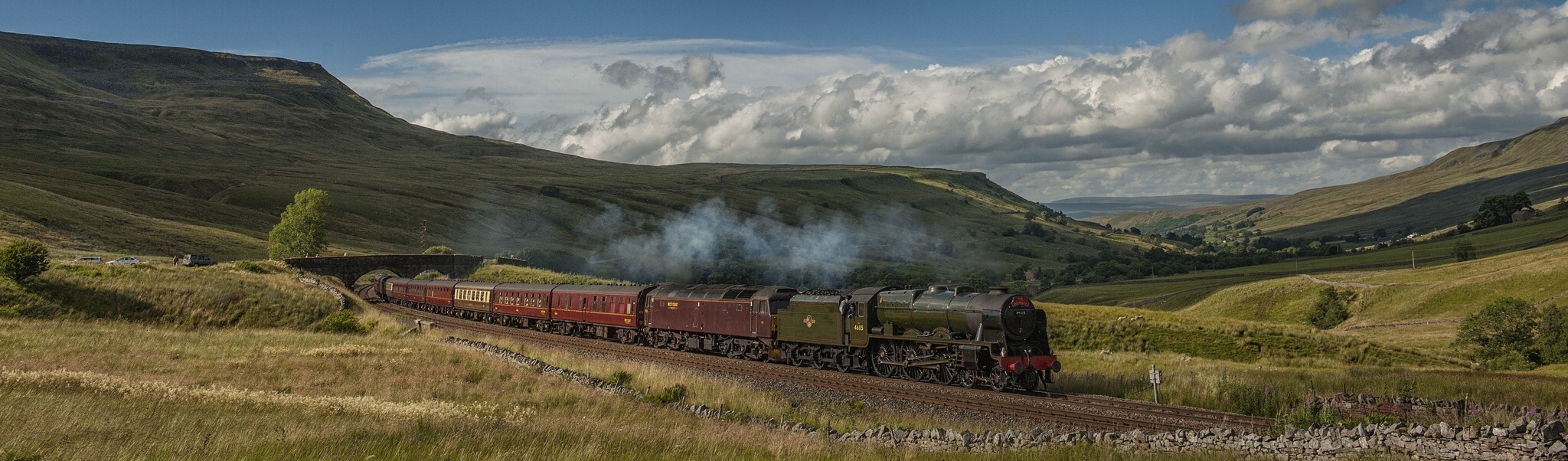
The class W was created after the Second World War as a Mountain with a low axle load, which was mainly intended to pull freight trains and, if necessary, passenger trains. The original design of the WAGR was fundamentally adapted and standardized by Beyer, Peacock & Co. before production started. The first 40 locos were only pre-assembled in England and completed in Australia, while the last 20 were delivered ready to run.
The running gear was basically based on that of the South Australian Railway class 400 Garratt, which was built as a “Double Mountain”. The boiler was built with a combustion chamber, thermic syphons and arch tubes and was optimized for the inferior Collie Fields coal.
Despite the standardization, the locomotives had a few teething problems, which initially led to many breakdowns and required changes to the locomotives. The Silverton Tramway received four identical locomotives, which were also designated as class W. The WAGR retired them between 1968 and 1972. Today, 15 of the 60 locomotives are still ain existence, some of which are regularly used on tourist trains and others are being overhauled.
Technical data
General
- Built
- 1951-1952
- Manufacturers
- Beyer, Peacock & Co.
- Wheel arrangement
- 4-8-2 (Mountain)
- Gauge
- 1,067 mm (Cape gauge)
Dimensions and weights
- Wheelbase
- 9.60 m
- Adhesion mass
- 39.5 t
- Total mass
- 99.1 t
- Rigid wheelbase
- 4.08 m
- Axle load
- 10 t
- Water capacity
- 13,639 l
- Fuel capacity
- 5.1 t (coal)
Boiler
- Grate area
- 2.508 m²
- Firebox surface
- 17.373 m²
- Tube heating surface
- 86.4 m²
- Evaporative heating surface
- 103.773 m²
- Superheater surface
- 28.335 m²
- Total heating surface
- 132.1 m²
Power plant
- Driver diameter
- 1,219 mm
- Boiler pressure
- 13.8 bar
- Expansion type
- simple expansion
- Cylinders
- two, 406 x 610 mm
Power
- Power source
- steam
- Estimated power
- 1,044 kW (1,419 PS)
- Starting effort
- 96.8 kN
Calculated values
- Factor of adhesion
- 1 : 4.00
- Optimal speed
- 66 km/h
- Power-to-weight ratio
- 10.5 kW/t
- Heating Surface Equivalent
- 247.3 m²
- Cylinder volume/HSE
- 1 : 639.49
- Tractive force/Heating surface
- 1 : 15.30
- Grate area/Heating surface
- 1 : 52.67
- Firebox/Tube surface
- 1 : 4.97
- Total/Superheater
- 1 : 3.66