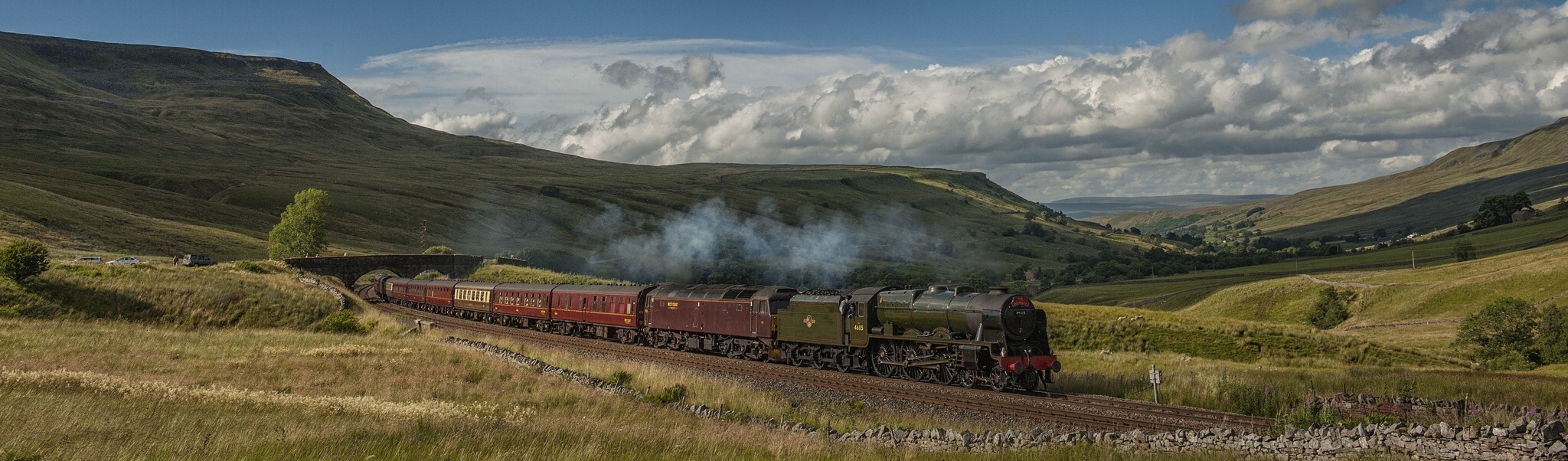




New Zealand Railways class C (1930)
New Zealand 1930 24 produced

When the trains became heavier and heavier, the NZR developed a powerful shunting locomotive as a tender locomotive. In order to keep the axle load low and to enable sufficiently large driving wheels for occasional use in front of passenger trains, the class WF 2-6-4T tank locomotive was used as the basis and the second trailing axle was removed. After the class C had become too light for the ever heavier trains, it was also used for suburban trains. Half of the locomotives were retired between 1964 and 1968.
Technical data
General
- Built
- 1930-1931
- Manufacturers
- Hillside, Hutt
- Wheel arrangement
- 2-6-2 (Prairie)
- Gauge
- 1,067 mm (Cape gauge)
Dimensions and weights
- Length
- 16.61 m
- Wheelbase
- 7.24 m
- Total wheelbase
- 13.97 m
- Service mass
- 39.9 t
- Adhesion mass
- 26.4 t
- Total mass
- 67.6 t
- Rigid wheelbase
- 3.05 m
- Water capacity
- 9,085 l
- Fuel capacity
- 3.8 t (coal)
Boiler
- Grate area
- 2.23 m²
- Firebox surface
- 13.006 m²
- Tube heating surface
- 60.039 m²
- Evaporative heating surface
- 73.045 m²
- Superheater surface
- 12.821 m²
- Total heating surface
- 85.9 m²
Power plant
- Driver diameter
- 1,143 mm
- Boiler pressure
- 13.8 bar
- Expansion type
- simple expansion
- Cylinders
- two, 356 x 559 mm
Power
- Power source
- steam
- Estimated power
- 671 kW (912 PS)
- Starting effort
- 72.5 kN
Calculated values
- Factor of adhesion
- 1 : 3.57
- Optimal speed
- 56 km/h
- Power-to-weight ratio
- 16.8 kW/t
- Heating Surface Equivalent
- 163.7 m²
- Cylinder volume/HSE
- 1 : 677.96
- Adhesive weight/Total
- 1 : 1.51
- Tractive force/Heating surface
- 1 : 17.63
- Grate area/Heating surface
- 1 : 38.50
- Firebox/Tube surface
- 1 : 4.62
- Total/Superheater
- 1 : 5.70