


Stadler Rail EuroDual
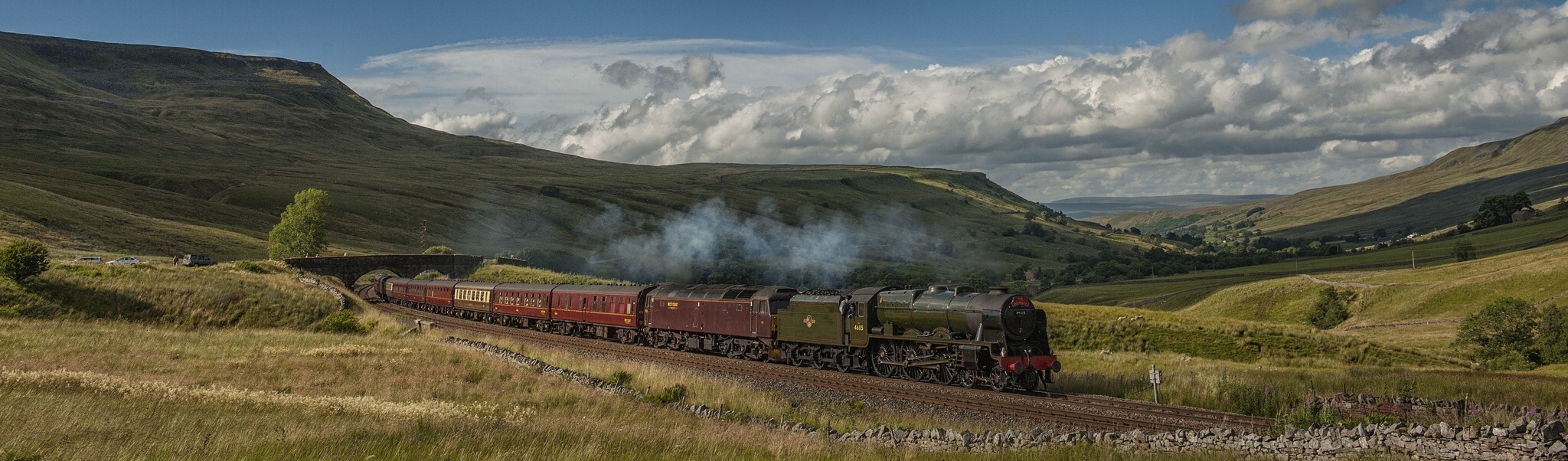
DB AG class 159

With older electro-diesel locomotives, compromises had to be made between the two types of power, since it was not possible to accommodate two full-fledged power systems. As development progressed, Stadler succeeded in combining an electric locomotive with an output of 7,000 kW and a diesel locomotive with 2,800 kW in one locomotive body. The development was primarily driven by the Havelland Railway, which needed a locomotive for the Rübelandbahn that could also work under 25,000 volts and also provide full traction on the non-electrified connecting lines.
The basis was the Euro4000, which Vossloh manufactured in Valencia, Spain. After the plant was bought by Stadler in 2015, this locomotive could be used as a basis and further developed into a modern dual-power locomotive. The EMD engine was replaced with the more compact Caterpillar C175-16 that Vossloh had already used in the British class 68. In electric operation, the locomotive is compatible with four systems with direct and alternating current. Under 25,000 volts it has an output of 7,000 kW and under 15,000 volts only 6,150 kW. Since there is not such a high level of power available in DC operation, the diesel engine can additionally be used here. The power mode can also be switched while running, but this is not permitted in Germany.
At the same time as the EuroDual, the Euro4001 was developed as a pure diesel locomotive with the same engine. A purely electric locomotive with a maximum of 6,200 kW under 25,000 volts is offered as the Euro6000. The most powerful variant is the Euro9000, which has an output of 9,000 kW when operated with alternating current. The diesel engine is declared here as a last-mile diesel and has an output of only 900 kW. Optionally, however, even two of these engines can be installed.
The EuroDual and the Euro9000 are mainly operated by German railway companies and leasing companies. Seven are used in Turkey and 30 more will be delivered to GB Railfreight in the UK from 2025. Although they are also optionally available for 160 km/h, they are normally only used in freight service. The Euro6000 has so far only been delivered to customers from the Iberian Peninsula, most of them in Iberian broad gauge and some in standard gauge.
Technical data
General
| Property | EuroDual | Euro6000 | Euro9000 - 1 engine | Euro 9000 - 2 engines |
|---|---|---|---|---|
| Built | seit 2017 | seit 2017 | ||
| Manufacturers | Stadler | |||
| Wheel arrangement | C-C | |||
| Gauge | 1,435 mm (Standard gauge); 1,668 mm (Iberian broad gauge) | |||
Dimensions and weights
| Property | EuroDual | Euro6000 | Euro9000 - 1 engine | Euro 9000 - 2 engines |
|---|---|---|---|---|
| Length | 23.02 m | |||
| Wheelbase | 17.60 m | |||
| Service mass | 123 t | 120 t | 123 t | |
| Adhesion mass | 123 t | 120 t | 123 t | |
| Rigid wheelbase | 3.60 m | |||
| Axle load | 20.5 t | 20 t | 20.5 t | |
Power plant
| Property | EuroDual | Euro6000 | Euro9000 - 1 engine | Euro 9000 - 2 engines |
|---|---|---|---|---|
| Engine | Caterpillar C175-16 | Caterpillar C27 | ||
| Engine type | V16 diesel | V12 diesel | 2x V12 diesel | |
Power
| Property | EuroDual | Euro6000 | Euro9000 - 1 engine | Euro 9000 - 2 engines |
|---|---|---|---|---|
| Power source | electric - AC/DC + diesel-electric | electric - AC/DC | electric - AC/DC + diesel-electric | |
| Hourly power | 7,000 kW (9,517 PS) | 6,200 kW (8,430 PS) | 9,000 kW (12,237 PS) | |
| Indicated power | 2,800 kW (3,807 PS) | 900 kW (1,224 PS) | 1,800 kW (2,447 PS) | |
| Top speed | 120 km/h | 160 km/h | 120 km/h | |
| Starting effort | 500.0 kN | |||
Calculated values
| Property | EuroDual | Euro6000 | Euro9000 - 1 engine | Euro 9000 - 2 engines |
|---|---|---|---|---|
| Factor of adhesion | 1 : 2.41 | 1 : 2.35 | 1 : 2.41 | |
| Power-to-weight ratio | 56.9 kW/t | 51.7 kW/t | 75.0 kW/t | 73.2 kW/t |
| Adhesive weight/Total | 1 : 1.00 | |||