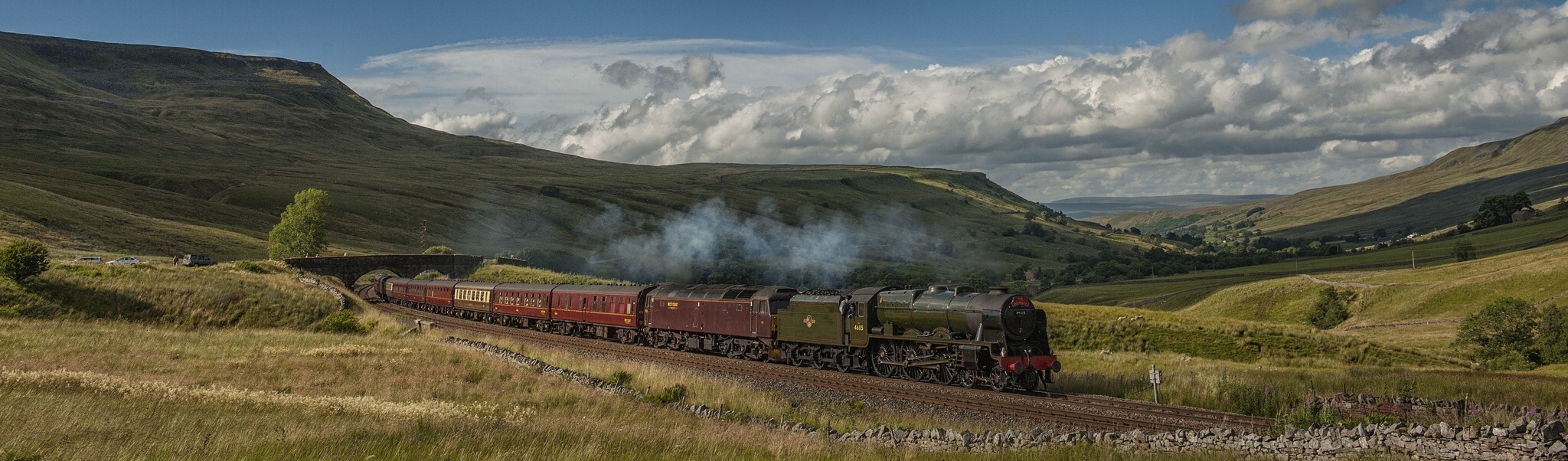
The class II c designated express locomotives which, contrary to usual practice, had been developed based on the English practice. They were the first locomotives in Germany to be certified for a maximum operational speed of 110 km/h. The clearest distinguishing feature was the inside plate frame with wheel housings, which partially covered the 2,100 mm large coupled wheels and started at the level of the very low running board. In addition, the cylinders were on the inside, which was very rare in Germany for two-cylinder steam locomotives.
Due to the long wheelbase of the bogie and the low-lying boiler, the running characteristics were very good, so that the locomotives even ran smoothly at 120 km/h during test drives. The large wheels also helped maintain higher speeds for longer periods, and thus the 110 km/h certification was granted.
The development and production of the first series models took place at Grafenstaden in Alsace, but further vehicles followed from the Karlsruhe Engineering Society and the Saxon Machine Factory Hartmann. A total of 35 pieces were made between 1892 and 1900.
In order to reduce the effort required at high speeds, two modifications were made to the last five machines, as would also be found on later locomotives. One was a wind-cutter cab, i.e. the front wall of the cab was divided vertically in two and both halves were pulled back at a sharp angle in a V-shape. The other adjustment was an aerodynamically clad smokebox door. Instead of being conical like other German express locomotives from the beginning of the century, the tip was pulled down almost to the bottom of the boiler and the fairing formed a transition to the cylinders. Along with these modifications came an increase in boiler pressure from 12 to 13 bar.
Despite their good running characteristics, the tractive power of the locomotives was soon no longer sufficient for lighter express trains, as these could pull a maximum of 260 tons at top speed. In addition, higher demands were now placed on the acceleration of trains, which gradually reduced them to lower services. After the First World War, nine examples came to France and were operated there by the État state railway as class 220.9. In the period that followed, the number of locomotives remaining in Germany decreased, which meant that the planned takeover of the last machines by the Reichsbahn and re-designation to the class 3673 did not occur.