


Prussian G 81
German Reichsbahn class 5525-56
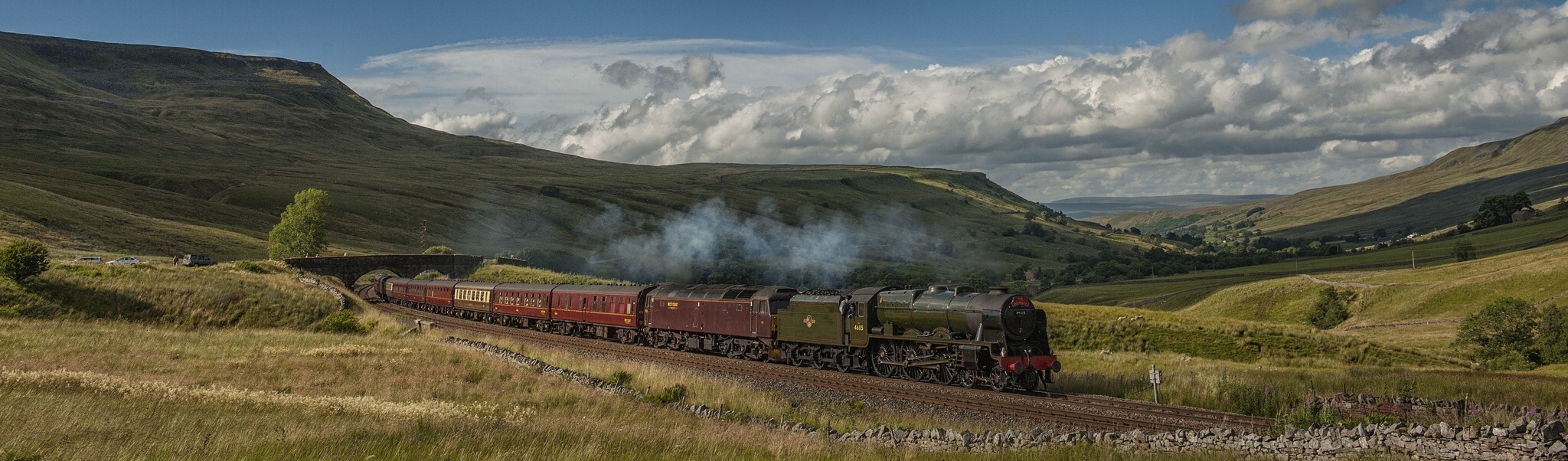
As already described in the article about the G 8, this did not have a particularly high output due to the limitation of the axle load to just over 14 tonnes. Therefore, the more powerful G 81 was developed on the basis of the G 8, but only suitable for main lines. Initially, this variant was only referred to as the “augmented standard design” until it was given a separate designation. 5,155 were built between 1913 and 1921, making them the most numerous Länderbahn steam locomotive. 4,958 of these went to the Prussian State Railways, the rest were ordered by other railways at home and abroad.
The most important difference to the G 8 was a larger boiler, the pressure of which was also increased from 12 to 14 bars. The cylinders had the same dimensions as the last batch of the predecessor, but could convert more power due to the higher pressure. Overall, the indicated power was increased from 1,100 to 1,260 hp, while the service weight and thus the adhesive weight increased by more than ten tonnes.
The Reichsbahn took over 3,111 locomotives from Prussia and ten from the Reichseisenbahnen Alsace-Lorraine, which were classified together in the class 5525-56. Twelve more from Mecklenburg became the class 5558. Between 1934 and 1941, 691 locomotives were fitted with a leading axle, which improved running smoothness and allowed a top speed of 70 km/h. These became the class 562-8. As with other classes, more came to the Reichsbahn in 1935 after the Saarland was incorporated into the Reich, just as some returned from Poland during World War II.
After the war, a total of around 1,000 were taken over by the two German railways. In 1968 there were still 200 of these. They were therefore given the computer-compliant class number 055 on the Bundesbahn, but were also retired by the end of 1972. In the last years, these locomotives have mainly been used for shunting services, as they were too slow for freight trains on main lines, but also too heavy for many branch lines.
Technical data
General
- Built
- 1913-1921
- Manufacturers
- Henschel, Vulcan, Hanomag, O&K, Wolf, Grafenstaden
- Wheel arrangement
- 0-8-0 (Eight-coupled)
- Gauge
- 1,435 mm (Standard gauge)
Dimensions and weights
- Length
- 18.29 m
- Wheelbase
- 4.70 m
- Total wheelbase
- 13.15 m
- Empty mass
- 61.7 t
- Service mass
- 67.3 t
- Adhesion mass
- 67.3 t
- Total mass
- 111.8 t
- Rigid wheelbase
- 4.70 m
- Axle load
- 16.9 t
- Water capacity
- 16,500 l
- Fuel capacity
- 7 t (coal)
Boiler
- Grate area
- 2.6 m²
- Firebox surface
- 13.4 m²
- Tube heating surface
- 130.8 m²
- Evaporative heating surface
- 144.2 m²
- Superheater surface
- 51.8 m²
- Total heating surface
- 196.0 m²
Power plant
- Driver diameter
- 1,350 mm
- Boiler pressure
- 14 bar
- Expansion type
- simple expansion
- Cylinders
- two, 600 x 660 mm
Power
- Power source
- steam
- Indicated power
- 927 kW (1,260 PS)
- Top speed
- 55 km/h
- Starting effort
- 209.4 kN
Calculated values
- Factor of adhesion
- 1 : 3.15
- Optimal speed
- 27 km/h
- Power-to-weight ratio
- 13.8 kW/t
- Heating Surface Equivalent
- 314.8 m²
- Cylinder volume/HSE
- 1 : 1,185.58
- Adhesive weight/Total
- 1 : 1.00
- Tractive force/Heating surface
- 1 : 22.32
- Grate area/Heating surface
- 1 : 75.38
- Firebox/Tube surface
- 1 : 9.76
- Total/Superheater
- 1 : 2.78