Banner
Navigation
loco-info.com
The reference for locomotives and railcars

Great Northern (UK) Stirling Single

Great Britain 1870 53 produced
ETH Zürich PD

Patrick Stirling believed that locomotives with large wheels would not only be suitable for higher speeds, but would also achieve better traction. So he borrowed a 2-2-2 locomotive from the Great Eastern and used it to develop a significantly larger locomotive. By adding a two-axle leading bogie, guidance at higher speeds was improved and the increased weight was better distributed.

The driving wheels were eight feet and one inch in diameter, equivalent to 2,464 mm. The cylinders were very large at 18 by 28 inches in order to still be able to convert enough steam at the lower rotational speeds of the large wheels. In order to be able to position the boiler low despite the large cylinders and also to avoid the problems with cranked axles and high forces, the cylinders were arranged on the outside. Between 1870 and 1895 a total of 53 were manufactured, which became increasingly heavier and had a higher boiler pressure.

The Singles were also used on heavier trains on the flat line between London and York with an average speed of around 50 mph or 80 km/h. Trains with ten to 16 three-axle coaches that weighed between 150 and 240 tons in total were common on lines that rarely had a gradient of more than 1 in 200 and a maximum of 1 in 95. With lighter trains, they could reach speeds of up to 85 mph or 137 km/h.

In the “Race to the North” they ran lighter trains at average speeds of more than 60 mph or 97 km/h. Even with heavier trains, there were strict instructions not to use pilot locomotives in order to showcase the performance of the Singles. After there were two derailments in 1895 and 1896 due to the high axle load on the driving axle, the weight was reduced.

At the turn of the century, the trains became too heavy for the Singles, so pilot locomotives were now used. With the introduction of Ivatt's Atlantics in 1898, the area of operation also shifted to less important trains. Nevertheless, some received a larger domed boiler by Ivatt. After the last ones were retired by 1916, only number 1 remained as the oldest Single from 1870. It ran for the last time in 1985 and is now in the National Railway Museum in York.
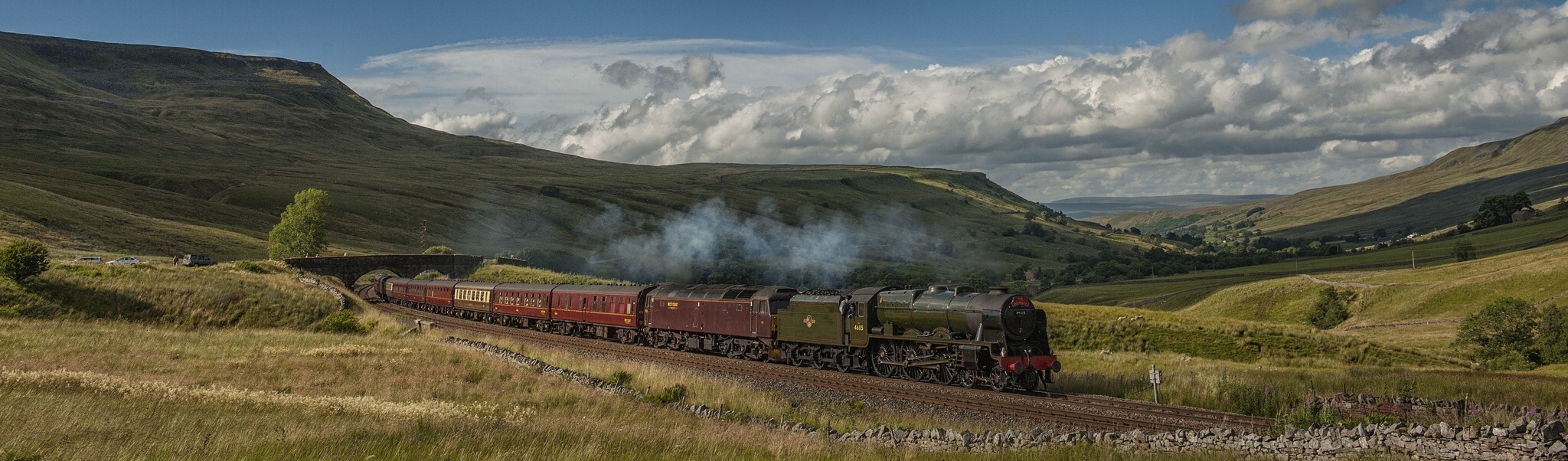
The no longer operational No. 1 in July 2003 in Doncaster Our Phellap / CC BY-SA 3.0
sectional drawing Locomotive Magazine, February 1902

Technical data

General

Property 1870 variant 1884 variant 1894 variant
Built 1870 1884 1894-1895
Manufacturers Doncaster
Wheel arrangement 4-2-2 (Single)
Gauge 1,435 mm (Standard gauge)

Dimensions and weights

Property 1870 variant 1884 variant 1894 variant
Length 15.42 m
Wheelbase 6.96 m 6.73 m 7.09 m
Service mass 39.1 t 45.9 t 50.3 t
Adhesion mass 15.2 t 17.3 t 19.9 t
Total mass 66.5 t 79.8 t 92.7 t
Rigid wheelbase 2.64 m 2.74 m
Axle load 15.2 t 17.3 t 19.9 t
Water capacity 12,200 l 13,185 l 17,504 l
Fuel capacity 3.6 t (coal) 5.1 t (coal)
Length loco 8.84 m 9.12 m

Boiler

Property 1870 variant 1884 variant 1894 variant
Grate area 1.635 m² 1.649 m² 1.858 m²
Firebox surface 11.334 m² 10.126 m² 11.308 m²
Tube heating surface 96.898 m² 86.957 m² 84.54 m²
Evaporative heating surface 108.232 m² 97.084 m² 95.848 m²
Total heating surface 108.2 m² 97.1 m² 95.8 m²

Power plant

Property 1870 variant 1884 variant 1894 variant
Driver diameter 2,464 mm 2,476 mm
Boiler pressure 9.7 bar 11 bar 11.9 bar
Expansion type simple expansion
Cylinders two, 457 x 711 mm two, 495 x 711 mm

Power

Property 1870 variant 1884 variant 1894 variant
Power source steam
Estimated power 410 kW (557 PS) 429 kW (583 PS) 485 kW (659 PS)
Starting effort 49.5 kN 56.3 kN 71.0 kN

Calculated values

Property 1870 variant 1884 variant 1894 variant
Factor of adhesion 1 : 3.02 1 : 3.01 1 : 2.75
Optimal speed 51 km/h 47 km/h 42 km/h
Power-to-weight ratio 10.5 kW/t 9.4 kW/t 9.6 kW/t
Heating Surface Equivalent 164.9 m² 147.7 m² 152.4 m²
Cylinder volume/HSE 1 : 1,416.11 1 : 1,580.90 1 : 1,798.45
Adhesive weight/Total 1 : 2.56 1 : 2.66 1 : 2.53
Tractive force/Heating surface 1 : 9.55 1 : 12.11 1 : 15.47
Grate area/Heating surface 1 : 66.20 1 : 58.87 1 : 51.59
Firebox/Tube surface 1 : 8.55 1 : 8.59 1 : 7.48
Auf Deutsch umschalten

Settings

Your settings are retained for this browser session only.

Consent to cookies

We use cookies to save your display settings. If you decline, the settings are retained only for the current browser session.