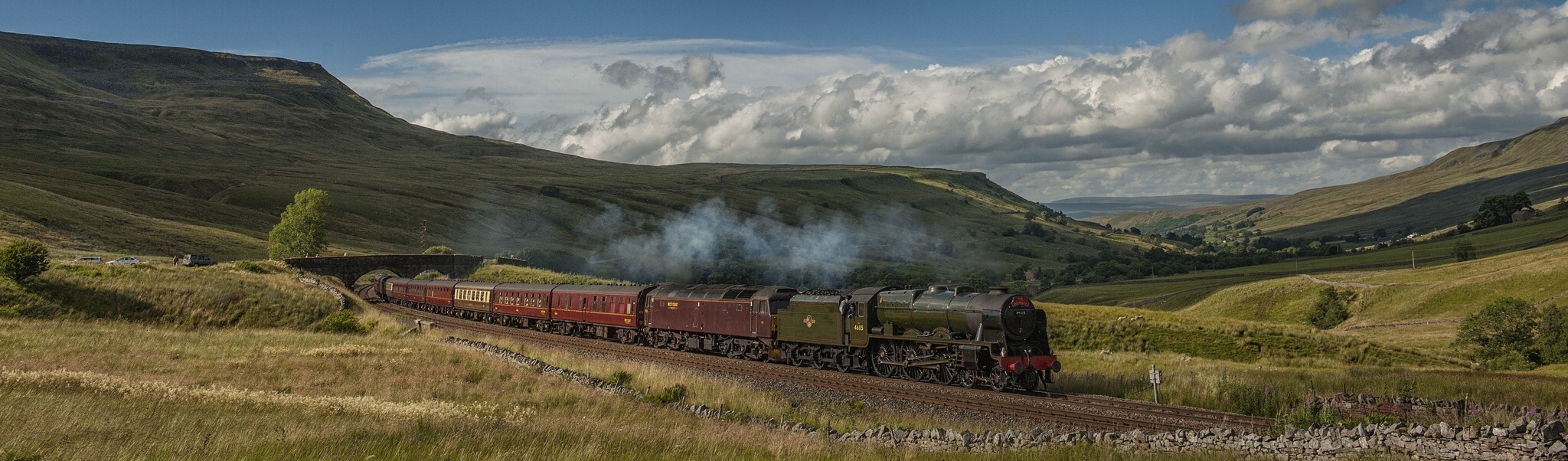



Islamic Republic of Iran Railways class 41.11
Shortly before the opening of the Trans-Iranian Railway in 1938, Krupp was tasked to design a 2-8-0 and a 2-10-0 locomotive. They had to be fired with oil, with the option to fire coal if necessary. Since the railway was still a new thing in the region, they were designed to be maintained in simple workshops and operated by inexperienced crews. The major part was made up of 49 2-8-0 locomotives.
24 were built by Krupp, 16 by Henschel and 9 by Esslingen. Designated class 41 due to four driving axles and one leading axle, they got the numbers 41.11 to 41.60. With the Anglo-Soviet Invasion of Iran in 1941, the procurement of German locomotives ended. The German locomotives were repaired, but at the same time British steam locomotives were introduced. It only took two more years until diesel traction was introduced with ALCO RSD-1 locomotives.
Technical data
General
- Built
- 1938
- Manufacturers
- Krupp, Henschel, Esslingen
- Wheel arrangement
- 2-8-0 (Consolidation)
- Gauge
- 1,435 mm (Standard gauge)
Dimensions and weights
- Total wheelbase
- 15.64 m
- Empty mass
- 74 t
- Service mass
- 81.3 t
- Adhesion mass
- 67.5 t
- Total mass
- 133 t
- Axle load
- 17 t
- Water capacity
- 21,000 l
- Fuel capacity
- 6,700 l (oil)
Boiler
- Grate area
- 3.9 m²
- Evaporative heating surface
- 185 m²
- Superheater surface
- 65 m²
- Total heating surface
- 250.0 m²
Power plant
- Driver diameter
- 1,450 mm
- Boiler pressure
- 15 bar
- Expansion type
- simple expansion
- Cylinders
- two, 560 x 720 mm
Power
- Power source
- steam
- Estimated power
- 1,150 kW (1,564 PS)
- Top speed
- 60 km/h
- Starting effort
- 198.5 kN
Calculated values
- Factor of adhesion
- 1 : 3.34
- Optimal speed
- 35 km/h
- Power-to-weight ratio
- 14.1 kW/t
- Adhesive weight/Total
- 1 : 1.20
- Tractive force/Heating surface
- 1 : 16.59
- Grate area/Heating surface
- 1 : 64.10
- Total/Superheater
- 1 : 2.85