


Metropolitan class H
London & North Eastern class H2
Great Britain 1920 8 produced

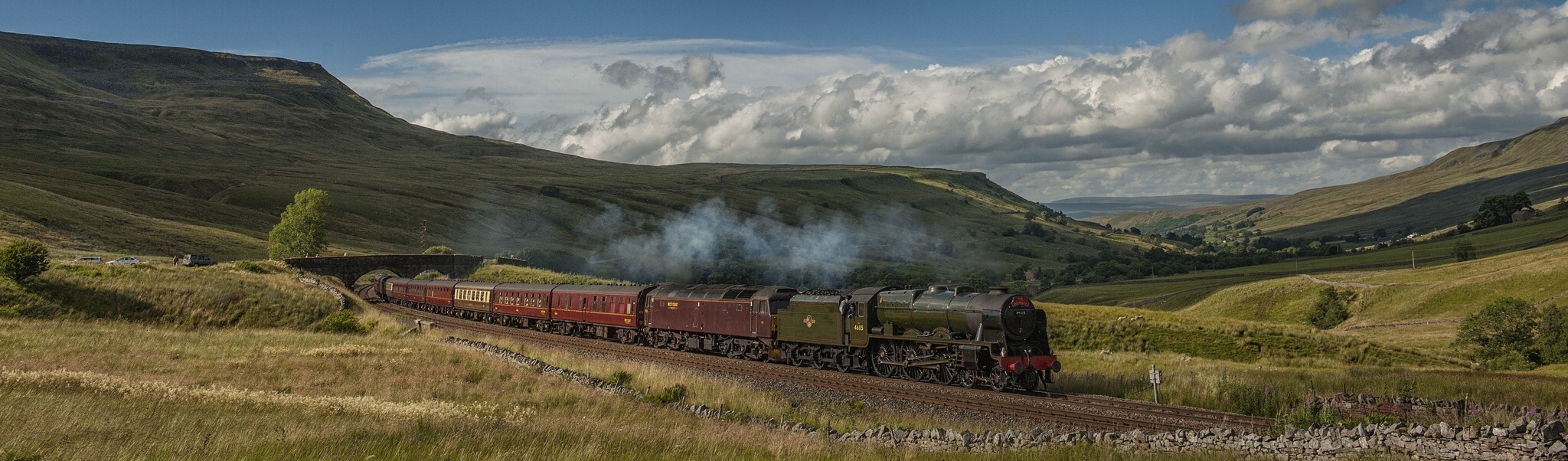
The Metropolitan Railway's class H was a tank locomotive for fast passenger services between the suburbs of London and the town of Aylesbury. It was developed as a “double ender” with two driving axles because the 0-6-4T class G had a rigid wheelbase that was too long for the tight curves in the suburbs.
In 1920 and 1921 Kerr, Stuart & Co. delivered a total of eight. They could easily negotiate curves up to 300 feet (91 m) and were designed for trains of 250 tons. When they were taken over by the LNER in 1923 they became Class H2. In 1941 they were relocated to Nottingham, but between 1942 and 1947 they were all scrapped.
Technical data
General
- Built
- 1920-1921
- Manufacturers
- Kerr, Stuart & Co.
- Wheel arrangement
- 4-4-4T (Reading)
- Gauge
- 1,435 mm (Standard gauge)
Dimensions and weights
- Length
- 12.76 m
- Wheelbase
- 10.21 m
- Service mass
- 78.2 t
- Adhesion mass
- 39.6 t
- Rigid wheelbase
- 2.36 m
- Axle load
- 19.8 t
- Water capacity
- 9,093 l
- Fuel capacity
- 5.1 t (coal)
Boiler
- Grate area
- 1.988 m²
- Firebox surface
- 12.263 m²
- Tube heating surface
- 95.226 m²
- Evaporative heating surface
- 107.489 m²
- Superheater surface
- 24.898 m²
- Total heating surface
- 132.4 m²
Power plant
- Driver diameter
- 1,753 mm
- Boiler pressure
- 11 bar
- Expansion type
- simple expansion
- Cylinders
- two, 483 x 660 mm
Power
- Power source
- steam
- Estimated power
- 690 kW (938 PS)
- Starting effort
- 82.3 kN
Calculated values
- Factor of adhesion
- 1 : 4.72
- Optimal speed
- 51 km/h
- Power-to-weight ratio
- 8.8 kW/t
- Heating Surface Equivalent
- 218.6 m²
- Cylinder volume/HSE
- 1 : 1,105.23
- Adhesive weight/Total
- 1 : 1.97
- Tractive force/Heating surface
- 1 : 12.98
- Grate area/Heating surface
- 1 : 66.59
- Firebox/Tube surface
- 1 : 7.77
- Total/Superheater
- 1 : 4.32