


London & North Western 19in Express Goods class
“Experiment Goods Class” and London, Midland & Scottish class 4F
Great Britain 1906 170 produced

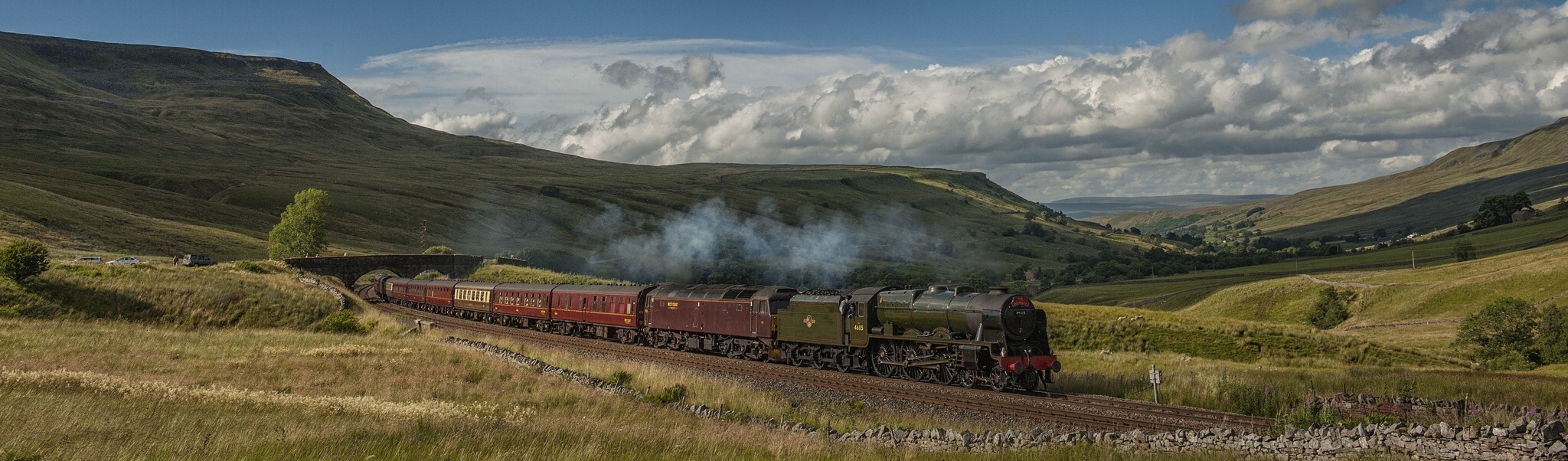
By reducing the driving wheel diameter from 75 to 62.5 inches, George Whale, superintendent at the LNWR, developed a locomotive for mixed service from his Experiment class. The resulting class reached a total of 170 and was officially referred to as “19in Express Goods,” a reference to the cylinder diameter and its primary intended use in front of express goods trains.
Because of their origin they were also called the “Experiment Goods Class”. They were classified by the LMS into power class 4F and were withdrawn from service from 1931. British Railways only took over three locomotives, which disappeared by 1950.
Technical data
General
- Built
- 1906-1909
- Manufacturers
- Crewe
- Wheel arrangement
- 4-6-0 (Ten-wheeler)
- Gauge
- 1,435 mm (Standard gauge)
Dimensions and weights
- Wheelbase
- 8.14 m
- Service mass
- 64 t
- Adhesion mass
- 44.7 t
- Total mass
- 101.6 t
- Rigid wheelbase
- 4.14 m
- Axle load
- 16.3 t
- Water capacity
- 13,639 l
- Fuel capacity
- 6.1 t (coal)
Boiler
- Grate area
- 2.323 m²
- Firebox surface
- 13.406 m²
- Tube heating surface
- 171.007 m²
- Evaporative heating surface
- 184.413 m²
- Total heating surface
- 184.4 m²
Power plant
- Driver diameter
- 1,588 mm
- Boiler pressure
- 12.8 bar
- Expansion type
- simple expansion
- Cylinders
- two, 483 x 660 mm
Power
- Power source
- steam
- Estimated power
- 671 kW (912 PS)
- Starting effort
- 105.0 kN
Calculated values
- Factor of adhesion
- 1 : 4.18
- Optimal speed
- 39 km/h
- Power-to-weight ratio
- 10.5 kW/t
- Heating Surface Equivalent
- 251.4 m²
- Cylinder volume/HSE
- 1 : 960.86
- Adhesive weight/Total
- 1 : 1.43
- Tractive force/Heating surface
- 1 : 11.90
- Grate area/Heating surface
- 1 : 79.39
- Firebox/Tube surface
- 1 : 12.76