


London & North Eastern Peppercorn class A2

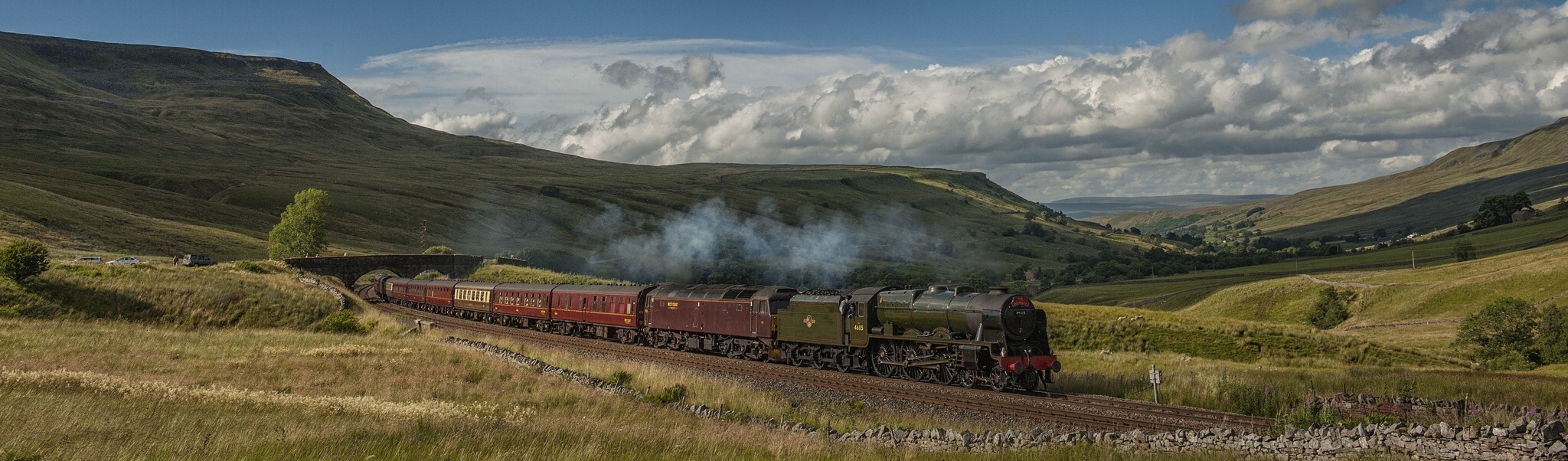
The Peppercorn class A2 was a Pacific locomotive designed in the last years of the LNER and inspired by the Thompson class A2/2. Like Thompson's locomotives, it had three cylinders and 6 ft 2 in (1,880 mm) drivers, as opposed to the 6 ft 8 in (2,032 mm) of other LNER Pacifics. This made it suited for lines with inclines, like branches of the East Coast Main Line and lines in Scotland. The first locomotive, No. 525, was built in 1947 at Doncaster and delivered to the LNER in December. It was named “A.H. Peppercorn” after its designer and last Chief Mechanical Engineer of the LNER. The next 14 locomotives were directly delivered to British Railways and named after race horses.
Compared to the A2/3, the new A2 had its outside cylinders moved towards the front and had lost its Kylchap exhaust. The cylinders still measured 19 inches in diameter and 26 inches in stroke and the boiler pressure was unchanged at 250 psi. This resulted in a starting tractive effort of 40,430 pounds. No. 60539 “Bronzino”, the last one, was delivered with a Kylchap exhaust. In 1949, five more were also fitted with this type of exhaust. In comparison with the bigger-wheeled Gresley Pacifics with smaller grates, they had a higher consumption when running at high speeds.
British Railways put them in power class 8P7F, what meant that they could also be used like a class 7F freight locomotive if needed. In England, all were withdrawn in 1962 and 1963. In Scotland the last ones were only withdrawn in 1966. The only one that was preserved was 60532 “Blue Peter”. It was steamed up for the first time again in 1974 and received its main line certificate in 1992 after a second restoration. The main line certificate expired in 2001, followed the boiler certificate that expired in 2002. A larger overhaul started in 2015 and in 2024, it became operational again.
Technical data
General
- Built
- 1947-1948
- Manufacturers
- Doncaster
- Wheel arrangement
- 4-6-2 (Pacific)
- Gauge
- 1,435 mm (Standard gauge)
Dimensions and weights
- Length
- 21.65 m
- Wheelbase
- 10.47 m
- Total wheelbase
- 18.44 m
- Service mass
- 102.6 t
- Total mass
- 163.1 t
- Rigid wheelbase
- 3.96 m
- Axle load
- 22.4 t
- Water capacity
- 22,731 l
- Fuel capacity
- 9.1 t (coal)
Boiler
- Grate area
- 4.645 m²
- Firebox surface
- 22.761 m²
- Tube heating surface
- 205.966 m²
- Evaporative heating surface
- 228.728 m²
- Superheater surface
- 63.174 m²
- Total heating surface
- 291.9 m²
Power plant
- Driver diameter
- 1,880 mm
- Boiler pressure
- 17.2 bar
- Expansion type
- simple expansion
- Cylinders
- three, 483 x 660 mm
Power
- Power source
- steam
- Estimated power
- 2,237 kW (3,041 PS)
- Starting effort
- 179.8 kN
Calculated values
- Optimal speed
- 76 km/h
- Power-to-weight ratio
- 21.8 kW/t
- Heating Surface Equivalent
- 468.9 m²
- Cylinder volume/HSE
- 1 : 772.91
- Tractive force/Heating surface
- 1 : 12.87
- Grate area/Heating surface
- 1 : 62.84
- Firebox/Tube surface
- 1 : 9.05
- Total/Superheater
- 1 : 3.62