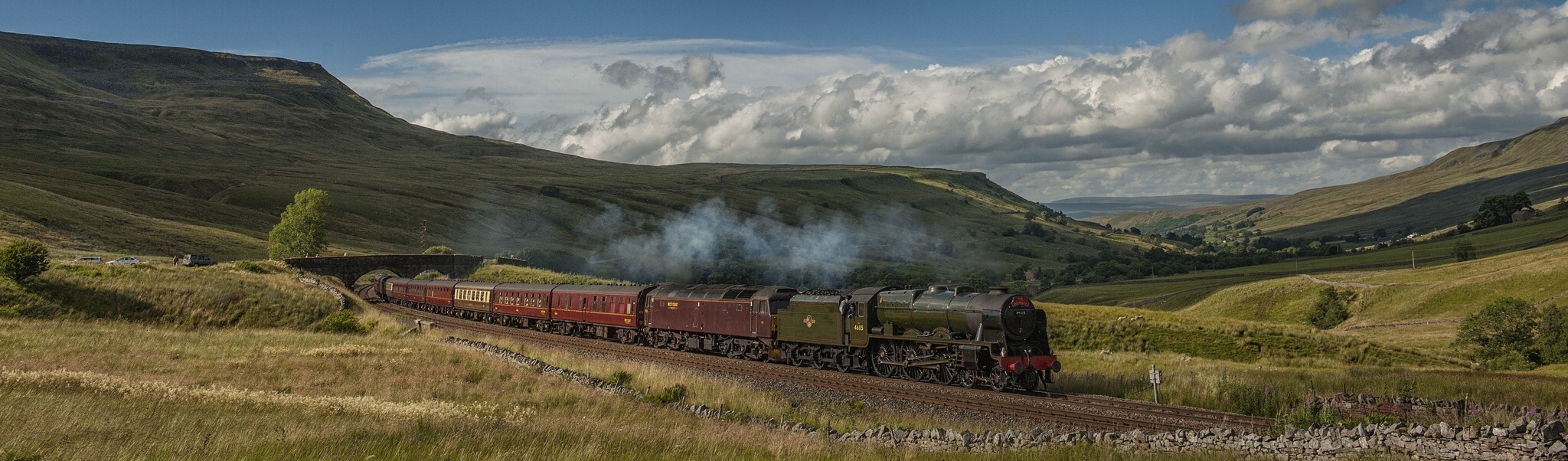



East Indian No. 21 “Express” and No. 22 “Fairy Queen”
No. 21 “Express” and No. 22 “Fairy Queen” are today the oldest operational steam locomotives in the world. They were built for the East Indian Railway in 1855 by Kitson, Thompson and Hewitson in England for passenger and mail service between Howrah and Raniganj in West Bengal. Both were 2-2-2 tank locomotives with a well tank between the frames and a small coal space in the cab. Originally, they also had a small coal tender. The drivers had a diameter of 72 inches (1,829 mm) and cylinders of 12 by 22 inches (305 by 559 mm).
In later years they were used for construction trains. Express was withdrawn in 1901 and Fairy Queen in 1909. Fairy Queen was the first one to be put into preservation in 1972. It was on display in National Railway Museum at Delhi and restored into operational condition in 1998. After some time of service on a regular basis, it was stored until it was found out in 2011 that many irreplaceable parts had been stolen. These parts had to be scratch-built until it could return to service in December of 2012. Also Express has been restored to operational condition in the same time.
Technical data
General
- Built
- 1855
- Manufacturers
- Kitson & Co.
- Wheel arrangement
- 2-2-2WT (Jenny Lind)
- Gauge
- 1,676 mm (Indian broad gauge)
Dimensions and weights
- Service mass
- 29.5 t
- Adhesion mass
- 11.2 t
- Axle load
- 11.2 t
- Water capacity
- 3,002 l
- Fuel capacity
- 2 t (coal)
Power plant
- Driver diameter
- 1,829 mm
- Boiler pressure
- 11 bar
- Expansion type
- simple expansion
- Cylinders
- two, 305 x 559 mm
Power
- Power source
- steam
- Indicated power
- 97 kW (132 PS)
- Starting effort
- 26.6 kN
Calculated values
- Factor of adhesion
- 1 : 4.12
- Optimal speed
- 23 km/h
- Power-to-weight ratio
- 3.3 kW/t
- Adhesive weight/Total
- 1 : 2.64