Banner
Navigation
loco-info.com
The reference for locomotives and railcars

London, Brighton & South Coast Hackworth Singles

Great Britain 1846 12 produced
No. 49 as built Locomotive Magazine, June 1896

From 1846, John Gray had twelve 2-2-2 express locomotives built for the LB&SCR, which are considered the forerunners of the Jenny Lind type. Although they had outside and inside frames, the driving axle with the six-foot wheels was only mounted on the inside frame. They already had a firebox with a round, raised ceiling, on which sat a second steam dome. They were said to be able to easily reach a speed of 40 mph with the train weights that were common at the time. Under Craven, all were rebuilt to a different wheel arrangement in order to collect experiences with the characteristics of the different types and their suitability for different tasks.

During the first rebuild in 1853, four were rebuilt into 2-4-0 freight locomotives. The diameter of the driving wheels was now four feet and nine inches. Later, three of them were rebuilt into 0-6-0T tank locomotives by exchanging the leading axle for another driving axle with the same wheel diameter. 

Between 1853 and 1855, six others were rebuilt into passenger locomotives, which, like the freight locomotives, had 2-4-0 wheel arrangement. However, these had a driving wheel diameter of five and a half feet. The fact that none of these were rebuilt again and remained in use until the 1870s suggests that they were considered successful in this form.

The other two locomotives were rebuilt to the Crampton design, which was a special design with a crankshaft. At the front end, the two carrying axles sat a short distance apart in the frame and behind the firebox was the driving axle, the wheels of which were still six feet in diameter but clad in a wooden wheel disc with no visible spokes. The inside cylinders worked on a crankshaft and drove external connecting rods. Both locomotives only ran in this form for about two years and were rebuilt into 2-4-0 freight locomotives in 1855. One of these two was rebuilt into a tank locomotive with the same wheel arrangement in 1858 and remained in service until 1875.
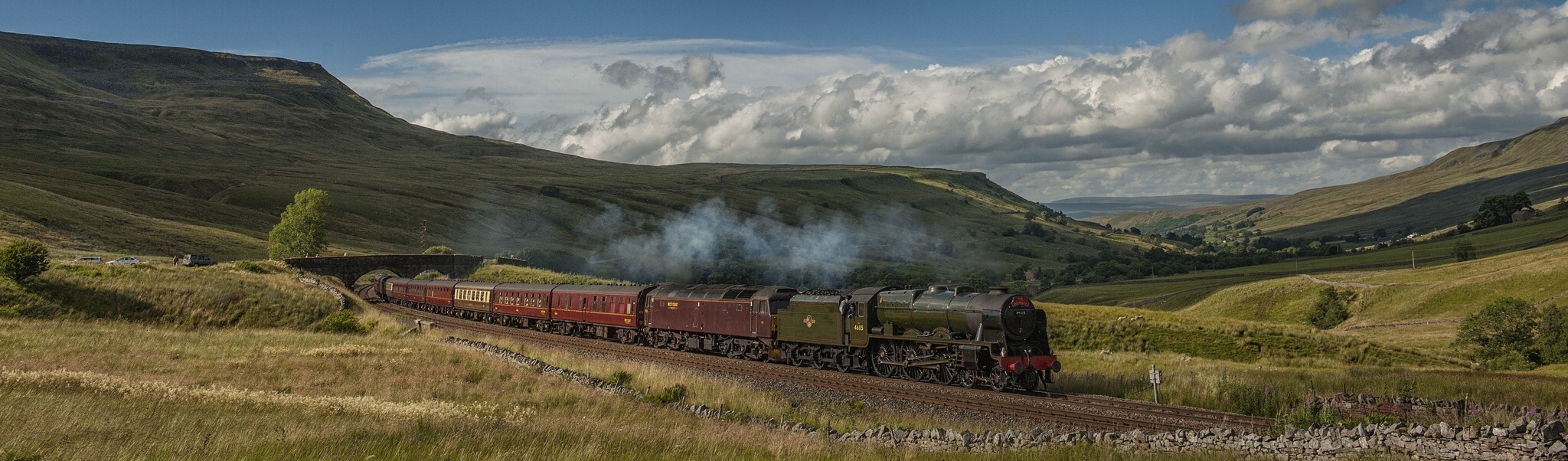
No. 53 rebuilt as 2-4-0 passenger engine Bradley: Locomotives of the London Brighton & South Coast Railway. Part 1
No. 49 rebuilt as 0-6-0T Locomotive Magazine, July 1907
No. 56 rebuilt as Crampton Locomotive Magazine, August 1910
No. 58 rebuilt as 2-4-0T Locomotive Magazine, June 1896

Technical data

General

Property as built rebuilt 2-4-0 passenger rebuilt 0-6-0T
Built 1846-1848 1852-1855 1853
Manufacturers Hackworth
Wheel arrangement 2-2-2 (Jenny Lind) 2-4-0 (Porter) 0-6-0T (Six-coupled)
Gauge 1,435 mm (Standard gauge)

Boiler

Property as built rebuilt 2-4-0 passenger rebuilt 0-6-0T
Firebox surface 7.339 m²
Tube heating surface 65.032 m²
Evaporative heating surface 72.372 m²
Total heating surface 72.4 m²

Power plant

Property as built rebuilt 2-4-0 passenger rebuilt 0-6-0T
Driver diameter 1,829 mm 1,676 mm 1,448 mm
Boiler pressure 6.9 bar
Expansion type simple expansion
Cylinders two, 381 x 610 mm two, 406 x 610 mm

Power

Property as built rebuilt 2-4-0 passenger rebuilt 0-6-0T
Power source steam
Estimated power 134 kW (182 PS)
Starting effort 28.4 kN 30.9 kN 40.8 kN

Calculated values

Property as built rebuilt 2-4-0 passenger rebuilt 0-6-0T
Optimal speed 29 km/h 26 km/h 21 km/h
Heating Surface Equivalent 109.1 m²
Cylinder volume/HSE 1 : 1,274.46
Tractive force/Heating surface 1 : 8.18
Firebox/Tube surface 1 : 8.86
Factor of adhesion 1 : 7.75
Power-to-weight ratio 4.2 kW/t
Adhesive weight/Total 1 : 1.00

Dimensions and weights

Property as built rebuilt 2-4-0 passenger rebuilt 0-6-0T
Wheelbase 4.66 m
Rigid wheelbase 4.66 m
Service mass 32.2 t
Adhesion mass 32.2 t
Axle load 12.9 t
Auf Deutsch umschalten

Settings

Your settings are retained for this browser session only.

Consent to cookies

We use cookies to save your display settings. If you decline, the settings are retained only for the current browser session.