


North British class J “Scott”
London & North Eastern classes D29 and D30

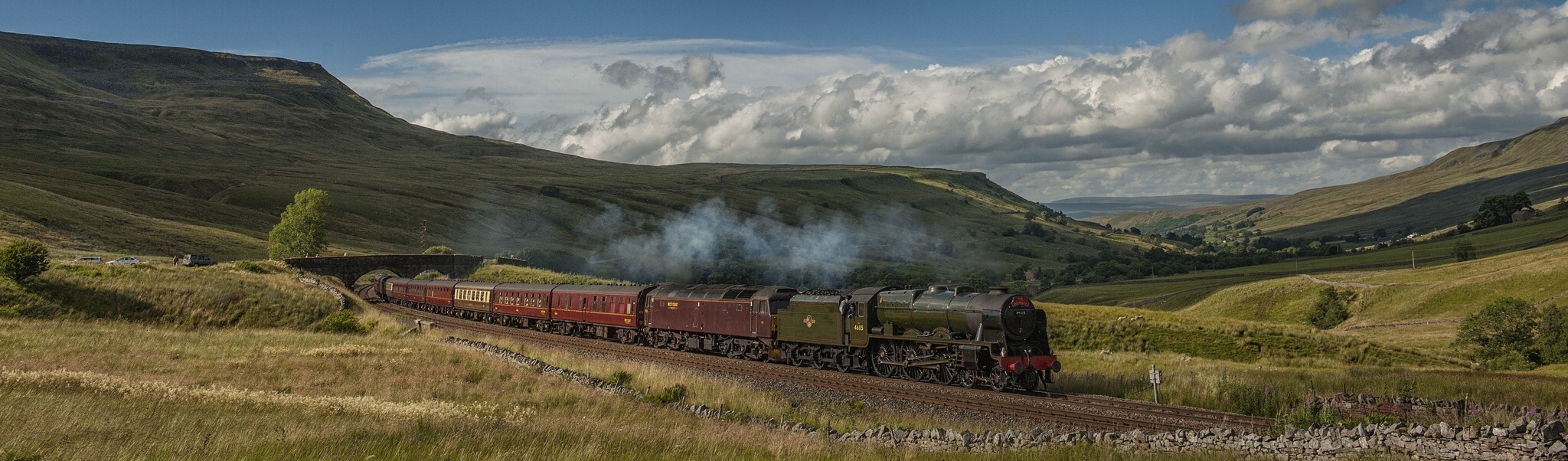
Based on the class K for mixed traffic, Reid commissioned the class J for express service. Like the first batch of the class K, the J had a wheel diameter of six feet six inches. The dimensions of the cylinders were also the same. In order to be able to run the distance from Edinburgh to Carlisle non-stop, they received a larger tender and a smaller boiler. From the original design, which was designated D29 by the LNER from 1923, six were made in 1909 and another ten in 1911. They were named after characters from Sir Walter Scott's stories, which is why they were also known as the “Scott Class”.
Also in 1911, two more were built with a superheater of the Schmidt type, which were later designated as D30/1. For operation with superheated steam, adjustments were made to the arrangement of the piston valves, which led to a higher position of the boiler. Between 1914 and 1920, further 25 production locomotives were built, this time with superheaters of the Robinson type. These became the D30/2 at the LNER.
As early as the 1920s, the D29 were increasingly being used for stopping services, fish trains and as pilots, while the D30 continued to be used for express trains. Nothing changed when most D29 got superheaters between 1925 and 1936. After that, the rebuilt ones were called D29/2 and the non-rebuilt ones D29/1. In the 1930s they were increasingly relocated to more rural regions. When British Railways was founded in 1948, a total of 35 class J locomotives were taken over. The last D29 were withdrawn as early as 1952 and the D30 only between 1957 and 1960.
Technical data
General
| Property | D29 | D30/1 | D30/2 |
|---|---|---|---|
| Built | 1909-1911 | 1912 | 1914-1920 |
| Manufacturers | North British, Cowlairs | ||
| Wheel arrangement | 4-4-0 (American) | ||
| Gauge | 1,435 mm (Standard gauge) | ||
Dimensions and weights
| Property | D29 | D30/1 | D30/2 |
|---|---|---|---|
| Wheelbase | 7.19 m | ||
| Total wheelbase | 14.24 m | ||
| Service mass | 55.7 t | 58.2 t | 58.7 t |
| Adhesion mass | 37 t | 38.5 t | |
| Total mass | 102.4 t | 104.9 t | 106.1 t |
| Rigid wheelbase | 2.90 m | ||
| Axle load | 18.7 t | 20 t | 19.7 t |
| Water capacity | 16,012 l | ||
| Fuel capacity | 7 t (coal) | ||
Boiler
| Property | D29 | D30/1 | D30/2 |
|---|---|---|---|
| Grate area | 1.963 m² | ||
| Firebox surface | 12.986 m² | 12.979 m² | |
| Tube heating surface | 137.331 m² | 108.409 m² | 94.148 m² |
| Evaporative heating surface | 150.317 m² | 121.387 m² | 107.127 m² |
| Total heating surface | 150.3 m² | 146.1 m² | 125.0 m² |
| Superheater surface | 24.749 m² | 17.921 m² | |
Power plant
| Property | D29 | D30/1 | D30/2 |
|---|---|---|---|
| Driver diameter | 1,981 mm | ||
| Boiler pressure | 13.1 bar | 11.7 bar | 11.4 bar |
| Expansion type | simple expansion | ||
| Cylinders | two, 483 x 660 mm | two, 508 x 660 mm | |
Power
| Property | D29 | D30/1 | D30/2 |
|---|---|---|---|
| Power source | steam | ||
| Estimated power | 671 kW (912 PS) | 746 kW (1,014 PS) | 708 kW (963 PS) |
| Starting effort | 86.4 kN | 85.7 kN | 83.2 kN |
Calculated values
| Property | D29 | D30/1 | D30/2 |
|---|---|---|---|
| Factor of adhesion | 1 : 4.20 | 1 : 4.40 | 1 : 4.54 |
| Optimal speed | 48 km/h | 53 km/h | 51 km/h |
| Power-to-weight ratio | 12.1 kW/t | 12.8 kW/t | 12.1 kW/t |
| Heating Surface Equivalent | 215.2 m² | 235.8 m² | 207.9 m² |
| Cylinder volume/HSE | 1 : 1,122.44 | 1 : 1,135.39 | 1 : 1,287.88 |
| Adhesive weight/Total | 1 : 1.51 | 1 : 1.53 | |
| Tractive force/Heating surface | 1 : 12.01 | 1 : 12.25 | 1 : 13.89 |
| Grate area/Heating surface | 1 : 76.58 | 1 : 74.45 | 1 : 63.70 |
| Firebox/Tube surface | 1 : 10.58 | 1 : 8.35 | 1 : 7.25 |
| Total/Superheater | 1 : 4.90 | 1 : 5.98 | |