


London & South Western class F13
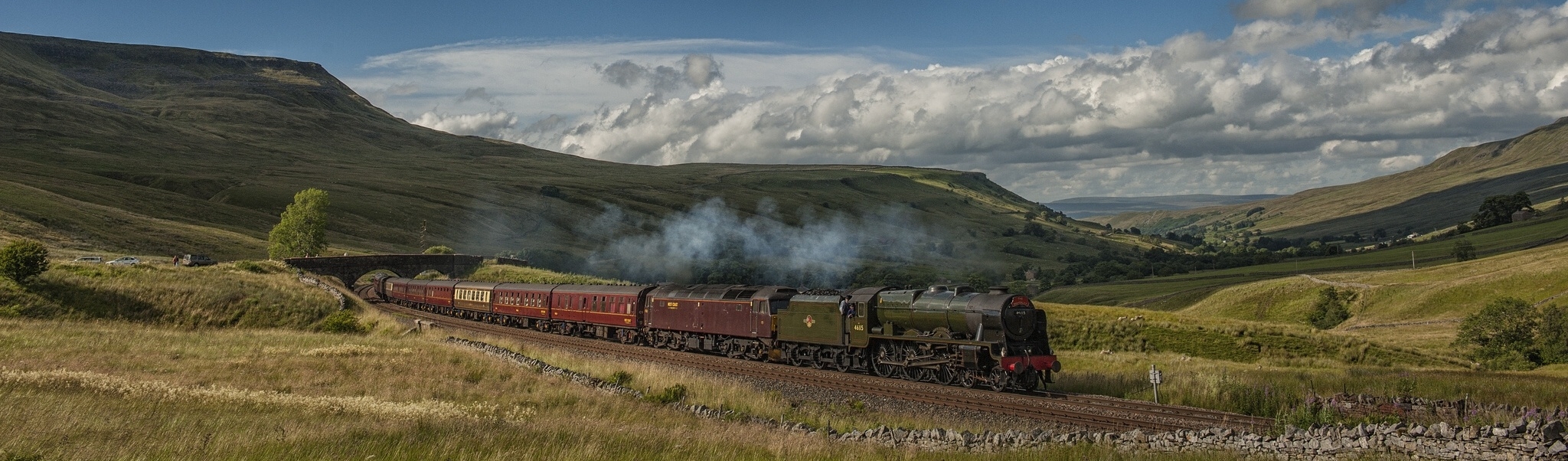
The London and South Western Railway made the jump from the 4-4-0 locomotive to the 4-6-0 in 1905 with the F13 class. The trigger for this were the so-called “boat trains”, which had to bring a constantly growing number of passengers with ever faster schedules to the ships on the English Channel coast. Since use was only to be expected on main lines, the designer Dugald Drummond hardly had to comply with any axle load restrictions. Due to the increased number of axles and the greater overall length, a significantly more powerful boiler than on previous locomotives was possible. In order to exploit its capacity, a simple four-cylinder engine was used. Since the LSWR did not use water troughs to fill up during the journey, four-axle tenders with a correspondingly large capacity were used.
Only five examples were built in 1905 in the LSWR workshops in London's Nine Elms. Although these locomotives looked very simple on the outside, the running gear was overly complex. The outside cylinders had Walschaerts-type valve gear, while the inside ones were controlled by their own Stephenson-type valve gear. The service with the boat trains between Salisbury and Exeter lasted only one year and was then discontinued. They were now repurposed as freight locomotives and henceforth had to haul coal trains between Salisbury and Southampton. One locomotive was fitted with the Eastleigh superheater introduced on the H15 in 1920, but this did not quite make up for the general weaknesses of the class. Eventually, all five F13s were rebuilt to H15s starting in 1924.
Technical data
General
| Property | as built | superheated |
|---|---|---|
| Built | 1905 | 1921 |
| Manufacturers | Nine Elms | |
| Wheel arrangement | 4-6-0 (Ten-wheeler) | |
| Gauge | 1,435 mm (Standard gauge) | |
Dimensions and weights
| Property | as built | superheated |
|---|---|---|
| Length | 19.48 m | |
| Wheelbase | 8.18 m | |
| Rigid wheelbase | 4.06 m | |
| Total wheelbase | 16.21 m | |
| Service weight | 74.2 t | 75.1 t |
| Adhesive weight | 52.3 t | 53.6 t |
| Total weight | 119.7 t | 120.7 t |
| Water capacity | 26,369 l | |
| Fuel capacity | 5.1 t (coal) | |
| Empty weight | 68.9 t | |
| Axle load | 18.8 t | |
Boiler
| Property | as built | superheated |
|---|---|---|
| Grate area | 2.926 m² | |
| Firebox surface | 48.031 m² | 15.608 m² |
| Tube heating surface | 205.316 m² | 159.422 m² |
| Evaporative heating surface | 253.347 m² | 175.029 m² |
| Total heating surface | 253.3 m² | 203.6 m² |
| Superheater surface | 28.614 m² | |
Power plant
| Property | as built | superheated |
|---|---|---|
| Driver diameter | 1,829 mm | |
| Boiler pressure | 12.1 bar | |
| Expansion type | simple expansion | |
| Cylinders | four, 406 x 610 mm | |
Power
| Property | as built | superheated |
|---|---|---|
| Power source | steam | |
| Estimated power | 1,044 kW (1,419 PS) | 1,081 kW (1,470 PS) |
| Starting effort | 112.9 kN | |
Calculated values
| Property | as built | superheated |
|---|---|---|
| Factor of adhesion | 1 : 4.55 | 1 : 4.66 |
| Optimal speed | 56 km/h | 58 km/h |
| Power-to-weight ratio | 14.1 kW/t | 14.4 kW/t |
| Heating Surface Equivalent | 493.5 m² | 310.3 m² |
| Cylinder volume/HSE | 1 : 640.93 | 1 : 1,019.35 |
| Adhesive weight/Total | 1 : 1.42 | 1 : 1.40 |
| Tractive force/Heating surface | 1 : 9.31 | 1 : 11.58 |
| Grate area/Heating surface | 1 : 86.58 | 1 : 69.60 |
| Firebox/Tube surface | 1 : 4.27 | 1 : 10.21 |
| Total/Superheater | 1 : 6.12 |