


London & North Western 17 inch Coal Engine
London, Midland & Scottish class 2F

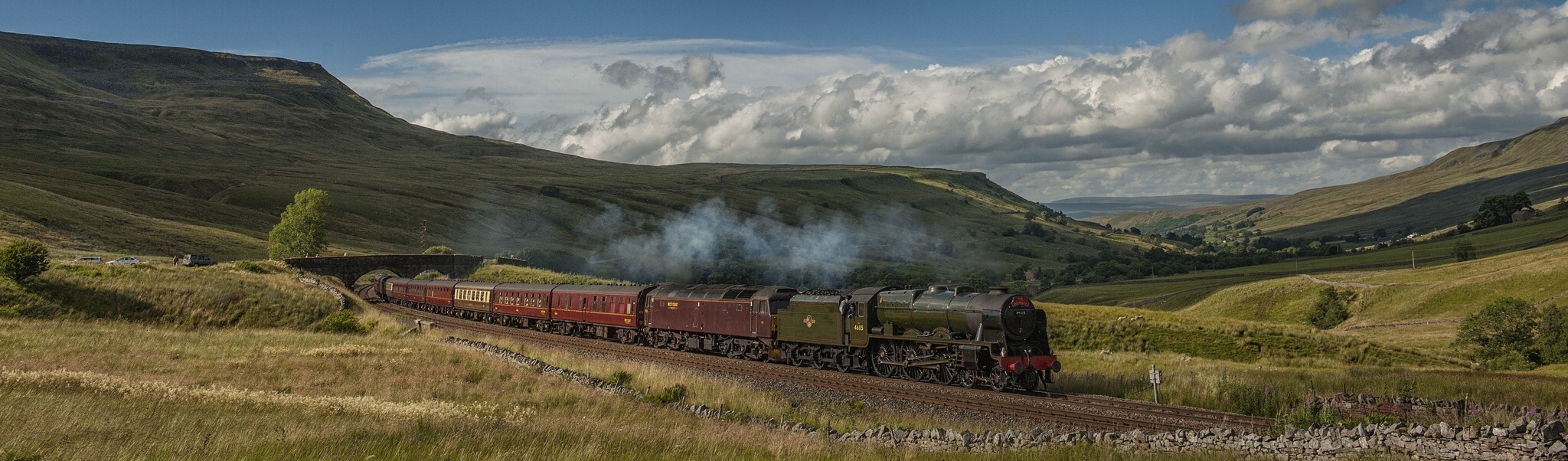
Francis Webb developed the 17 inch coal engine in the early 1870s as his first design for the LNWR. It was created under the requirement that production and operation should be as cheap as possible. These three-axle machines were sometimes described as the simplest and cheapest in the country, but on the other hand they were generally extremely successful with typical British maintenance. A total of 499 were built in 19 years.
One locomotive demonstrated that it could be built, including building up steam, in 25.5 hours. They could pull coal trains of 541 tons at a speed of 25 mph. From 1905 onwards, 45 were rebuilt into saddle tank locomotives. During the First World War, many were used by the military abroad, some even in Palestine. The LMS took over almost half in 1923, the British Railways received 35 in 1948 and used the last until 1953.
Technical data
General
- Built
- 1873-1892
- Manufacturers
- Crewe
- Wheel arrangement
- 0-6-0 (Six-coupled)
- Gauge
- 1,435 mm (Standard gauge)
Dimensions and weights
- Wheelbase
- 4.72 m
- Service mass
- 30 t
- Adhesion mass
- 30 t
- Total mass
- 55.4 t
- Rigid wheelbase
- 4.72 m
- Axle load
- 10.5 t
- Water capacity
- 8,184 l
Boiler
- Grate area
- 1.589 m²
- Firebox surface
- 8.789 m²
- Tube heating surface
- 91.082 m²
- Evaporative heating surface
- 99.871 m²
- Total heating surface
- 99.9 m²
Power plant
- Driver diameter
- 1,295 mm
- Boiler pressure
- 9.7 bar
- Expansion type
- simple expansion
- Cylinders
- two, 432 x 610 mm
Power
- Power source
- steam
- Estimated power
- 261 kW (355 PS)
- Starting effort
- 72.0 kN
Calculated values
- Factor of adhesion
- 1 : 4.09
- Optimal speed
- 23 km/h
- Power-to-weight ratio
- 8.7 kW/t
- Heating Surface Equivalent
- 143.8 m²
- Cylinder volume/HSE
- 1 : 1,241.43
- Adhesive weight/Total
- 1 : 1.00
- Tractive force/Heating surface
- 1 : 15.05
- Grate area/Heating surface
- 1 : 62.85
- Firebox/Tube surface
- 1 : 10.36