


Nordhausen-Wernigerode Railway No. 21II
German Reichsbahn 99 6001
Germany 1939 1 produced

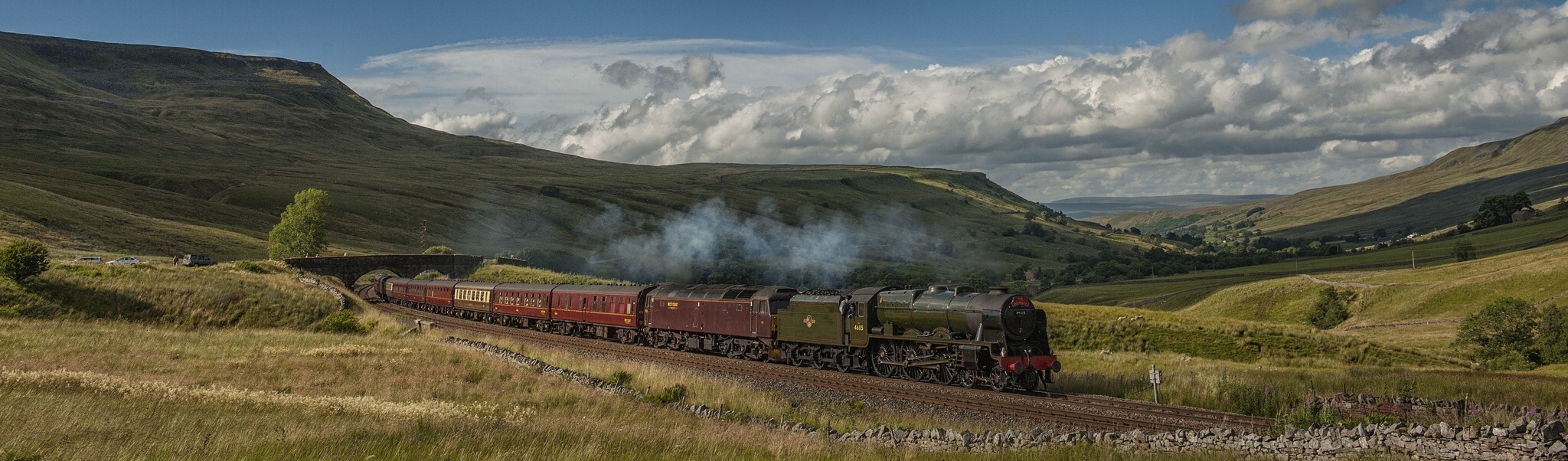
In the 1930s, several narrow-gauge railways in the Harz Mountains ordered a series of steam locomotives with different wheel arrangements from Krupp, which had been developed according to the Einheitslok principles. Although they looked similar to the standard locomotives of the Reichsbahn, there were some deviations from them. One of these locomotives was number 21II of the Nordhausen-Wernigerode railway, which was only built once because of the Second World War. It is one of the fastest narrow-gauge locomotives in Germany and is still in use today on the Harz narrow-gauge railways. It has been poerational with a new boiler since 2014.
Technical data
General
- Built
- 1939
- Manufacturers
- Krupp
- Wheel arrangement
- 2-6-2T (Prairie)
- Gauge
- 1,000 mm (Meter gauge)
Dimensions and weights
- Length
- 8.88 m
- Wheelbase
- 6.06 m
- Empty mass
- 37.8 t
- Service mass
- 47.6 t
- Adhesion mass
- 30 t
- Rigid wheelbase
- 2.40 m
- Axle load
- 10 t
- Water capacity
- 5,000 l
- Fuel capacity
- 2 t (coal)
Boiler
- Grate area
- 1.56 m²
- Firebox surface
- 7.36 m²
- Tube heating surface
- 72 m²
- Evaporative heating surface
- 79.36 m²
- Superheater surface
- 25.2 m²
- Total heating surface
- 104.6 m²
Power plant
- Driver diameter
- 1,000 mm
- Boiler pressure
- 14 bar
- Expansion type
- simple expansion
- Cylinders
- two, 420 x 500 mm
Power
- Power source
- steam
- Indicated power
- 400 kW (544 PS)
- Top speed
- 50 km/h
- Starting effort
- 105.0 kN
Calculated values
- Factor of adhesion
- 1 : 2.80
- Optimal speed
- 23 km/h
- Power-to-weight ratio
- 8.4 kW/t
- Heating Surface Equivalent
- 166.6 m²
- Cylinder volume/HSE
- 1 : 831.80
- Adhesive weight/Total
- 1 : 1.59
- Tractive force/Heating surface
- 1 : 20.96
- Grate area/Heating surface
- 1 : 67.03
- Firebox/Tube surface
- 1 : 9.78
- Total/Superheater
- 1 : 3.15