


London & South Western class L12 “Bulldogs”

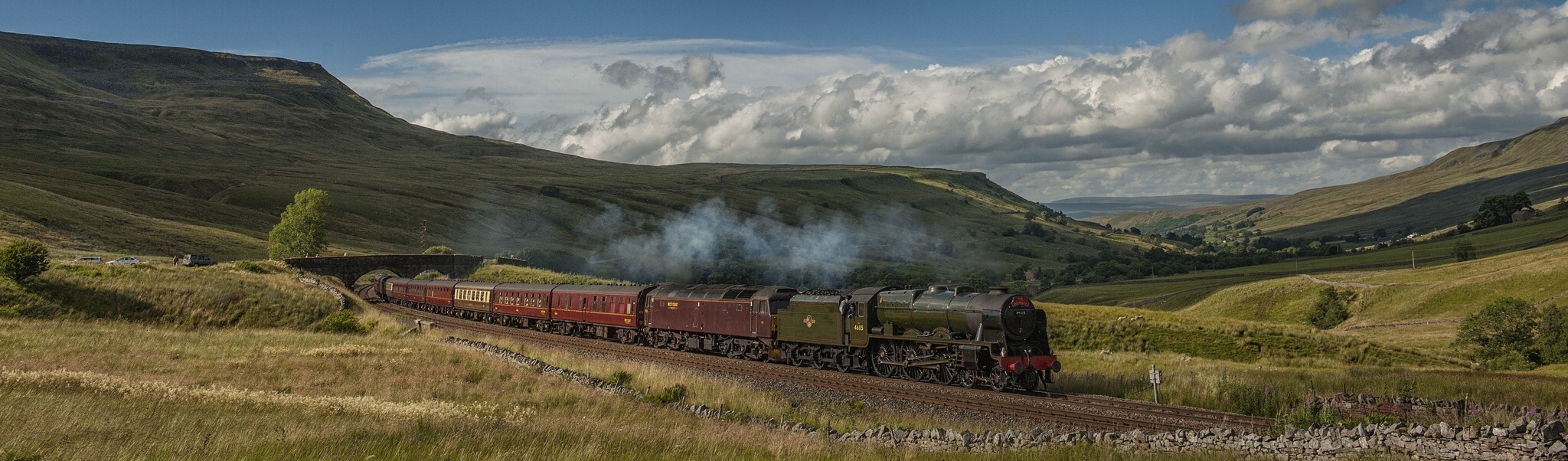
The GWR and the LSWR were in direct competition for boat trains, i.e. the heavy non-stop express trains between London and the ports on the Channel coast. In light of the new GWR 4-4-0 locos such as the City Class, Dugald Drummond developed the L12 as a successor to the T9 “Greyhound”. Both were similar in many respects, including the diameter of the driving wheels, cylinder dimensions, boiler pressure and the water tubes in the firebox.
With the boiler being shorter and thicker than that of the T9, they earned the nickname “Bulldogs”. Since the changes compared to the previous class were limited, they did not represent any particular improvement. The L12 also had a four-axle tender again in order to be able to run the line without stopping. Later, under Urie, they received a new boiler with a superheater that no longer had water tubes in the firebox.
The class made negative headlines as early as 1906 when number 421 derailed with a boat train in Salisbury, killing 28 and injuring 11 others. The accident is generally attributed to the L12's higher center of gravity, although other locos would also probably have derailed at 70 mph while negotiating a 30 mph curve. From this point on, the competition between the two companies became less intense. However, 421 was repaired and all 20 class members survived until the formation of British Railways. 18 were withdrawn in 1951 and the last two in 1953 and 1955 respectively.
Technical data
General
| Property | as built | superheated |
|---|---|---|
| Built | 1904-1905 | |
| Manufacturers | Nine Elms | |
| Wheel arrangement | 4-4-0 (American) | |
| Gauge | 1,435 mm (Standard gauge) | |
Dimensions and weights
| Property | as built | superheated |
|---|---|---|
| Length | 19.43 m | |
| Wheelbase | 7.09 m | |
| Service mass | 54.8 t | 54.1 t |
| Adhesion mass | 37.7 t | 35.7 t |
| Total mass | 100.3 t | 99.6 t |
| Rigid wheelbase | 3.05 m | |
| Axle load | 19.4 t | 18.5 t |
| Water capacity | 21,823 l | |
| Fuel capacity | 4.5 t (coal) | |
Boiler
| Property | as built | superheated |
|---|---|---|
| Grate area | 2.23 m² | |
| Firebox surface | 30.472 m² | 18.116 m² |
| Tube heating surface | 113.528 m² | 92.253 m² |
| Evaporative heating surface | 144 m² | 110.369 m² |
| Total heating surface | 144.0 m² | 128.5 m² |
| Superheater surface | 18.116 m² | |
Power plant
| Property | as built | superheated |
|---|---|---|
| Driver diameter | 2,007 mm | |
| Boiler pressure | 12.1 bar | |
| Expansion type | simple expansion | |
| Cylinders | two, 483 x 660 mm | |
Power
| Property | as built | superheated |
|---|---|---|
| Power source | steam | |
| Estimated power | 597 kW (812 PS) | 820 kW (1,115 PS) |
| Starting effort | 78.6 kN | |
Calculated values
| Property | as built | superheated |
|---|---|---|
| Factor of adhesion | 1 : 4.70 | 1 : 4.45 |
| Optimal speed | 47 km/h | 64 km/h |
| Power-to-weight ratio | 10.9 kW/t | 15.2 kW/t |
| Heating Surface Equivalent | 296.4 m² | 237.2 m² |
| Cylinder volume/HSE | 1 : 815.23 | 1 : 1,018.64 |
| Adhesive weight/Total | 1 : 1.45 | 1 : 1.52 |
| Tractive force/Heating surface | 1 : 11.40 | 1 : 12.78 |
| Grate area/Heating surface | 1 : 64.57 | 1 : 57.62 |
| Firebox/Tube surface | 1 : 3.73 | 1 : 5.09 |
| Total/Superheater | 1 : 6.09 |