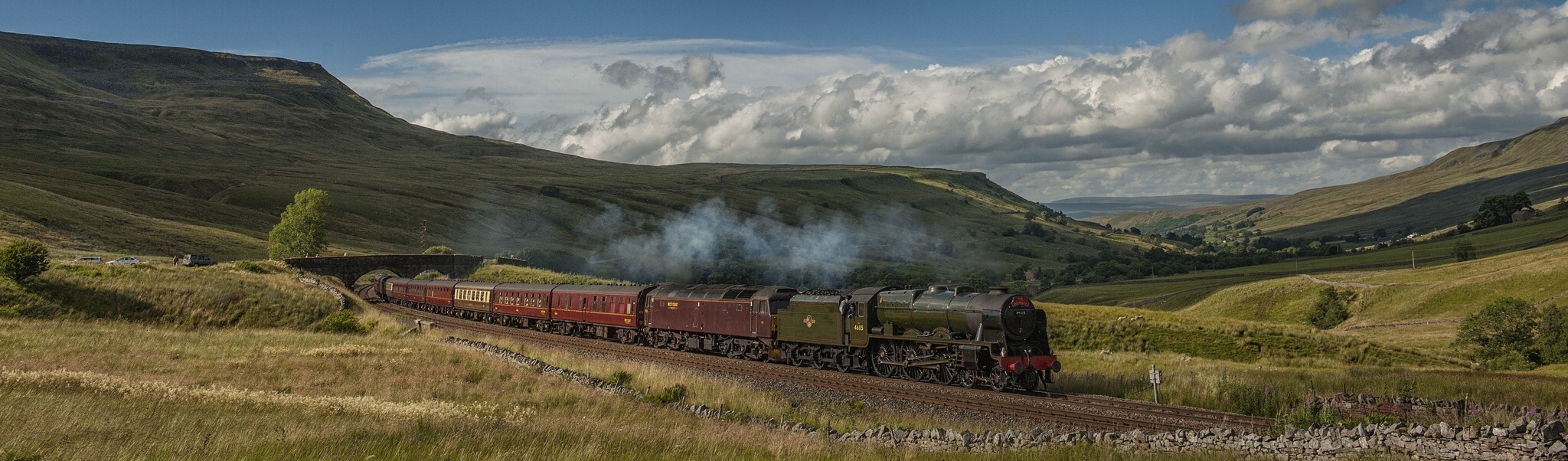




London & North Western 18 inch Goods Engine “Cauliflower”
London, Midland & Scottish class 2F
In 1880, Francis Webb introduced a new class of goods locomotives for the LNWR. Based on his 1873 “17 inch coal engine”, it had larger cylinders, a slightly larger boiler with a higher pressure and larger driving wheels. The official name of the new class was “18 inch Goods Engine” due to the cylinder diameter, but it was also called “5 ft 0 in Express Goods” due to the size of wheel centers.
Within 22 years, 310 locomotives have been built. Due to their large LNWR crest on the splashers, they got the nicknames “Cauliflower Class” and “Crested Goods”. With the grouping in 1923, they were put into LMS power class 2F. At this time, only two had been withdrawn. British Railways still inherited 69 in 1948 and withdrew the last ones in 1955. A class that had been derived from this class was the 0-6-2T “18 inch Tank Class”.
Technical data
General
- Built
- 1880-1902
- Manufacturers
- Crewe
- Wheel arrangement
- 0-6-0 (Six-coupled)
- Gauge
- 1,435 mm (Standard gauge)
Dimensions and weights
- Wheelbase
- 4.72 m
- Service mass
- 37.1 t
- Adhesion mass
- 37.1 t
- Rigid wheelbase
- 4.72 m
- Water capacity
- 9,093 l
- Fuel capacity
- 5.1 t (coal)
Boiler
- Grate area
- 1.589 m²
- Firebox surface
- 9.615 m²
- Tube heating surface
- 90.999 m²
- Evaporative heating surface
- 100.614 m²
- Total heating surface
- 100.6 m²
Power plant
- Driver diameter
- 1,588 mm
- Boiler pressure
- 10.3 bar
- Expansion type
- simple expansion
- Cylinders
- two, 457 x 610 mm
Power
- Power source
- steam
- Estimated power
- 317 kW (431 PS)
- Starting effort
- 70.6 kN
Calculated values
- Factor of adhesion
- 1 : 5.16
- Optimal speed
- 27 km/h
- Power-to-weight ratio
- 8.5 kW/t
- Heating Surface Equivalent
- 148.7 m²
- Cylinder volume/HSE
- 1 : 1,346.17
- Adhesive weight/Total
- 1 : 1.00
- Tractive force/Heating surface
- 1 : 14.65
- Grate area/Heating surface
- 1 : 63.32
- Firebox/Tube surface
- 1 : 9.46