


Central South African class 9
South African class 9

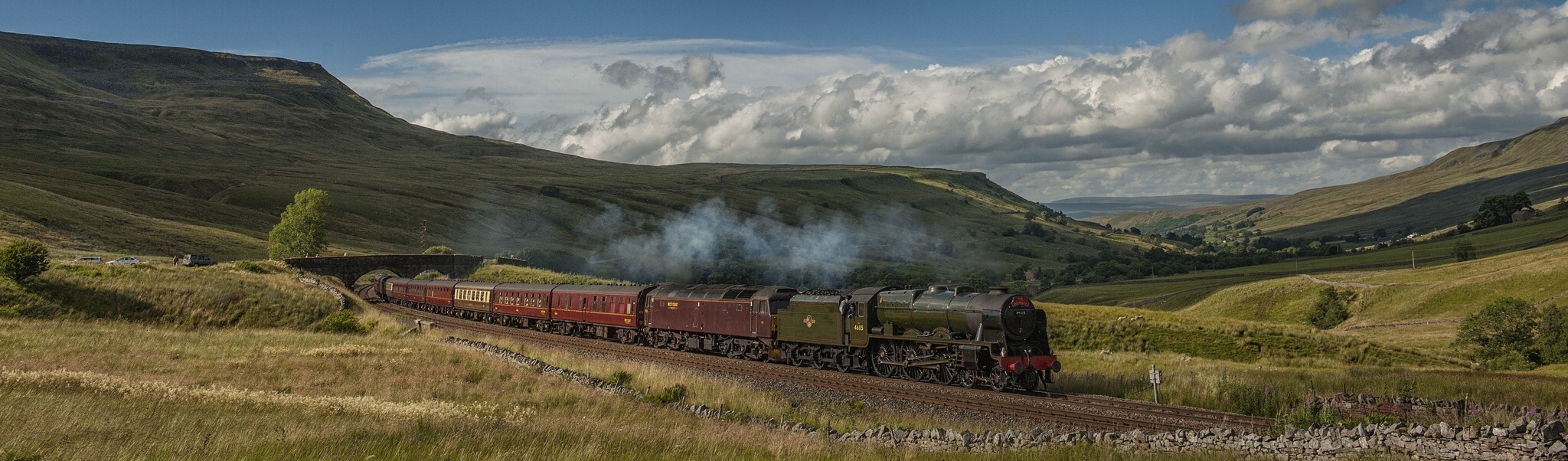
The class 9 was a 4-6-2 “Pacific” designed by P.A. Hyde as the lighter sister of the class 10. It was inspired by Beattie's class 8 4-8-0 and also had bar frames. Only five were built by Vulcan Foundry in 1904 and numbered 600 to 604. Their drivers measured 57 inches and their cylinders were 18 inches in diameter and 26 inches in stroke.
The boilers were saturated and had a narrow round-topped firebox. Eight class F 4-6-4T tank locomotives for suburban service were also derived from the class 9. After the founding of the South African Railways, the class 9 was numbered 727 to 731. They were not only used for lighter express trains, but also for mail service between Johannesburg and the Natal border. The last one was withdrawn by 1926, only 22 years after their construction.
Technical data
General
- Built
- 1904
- Manufacturers
- Vulcan Foundry
- Wheel arrangement
- 4-6-2 (Pacific)
- Gauge
- 1,067 mm (Cape gauge)
Dimensions and weights
- Wheelbase
- 8.45 m
- Total wheelbase
- 15.87 m
- Service mass
- 61.4 t
- Adhesion mass
- 39.7 t
- Total mass
- 110.6 t
- Rigid wheelbase
- 3.35 m
- Axle load
- 13.3 t
- Water capacity
- 18,185 l
- Fuel capacity
- 10.2 t (coal)
Boiler
- Grate area
- 2.021 m²
- Firebox surface
- 12.17 m²
- Tube heating surface
- 125.419 m²
- Evaporative heating surface
- 137.59 m²
- Total heating surface
- 137.6 m²
Power plant
- Driver diameter
- 1,448 mm
- Boiler pressure
- 13.8 bar
- Expansion type
- simple expansion
- Cylinders
- two, 457 x 660 mm
Power
- Power source
- steam
- Estimated power
- 634 kW (862 PS)
- Starting effort
- 111.8 kN
Calculated values
- Factor of adhesion
- 1 : 3.48
- Optimal speed
- 35 km/h
- Power-to-weight ratio
- 10.3 kW/t
- Heating Surface Equivalent
- 198.4 m²
- Cylinder volume/HSE
- 1 : 1,092.73
- Adhesive weight/Total
- 1 : 1.55
- Tractive force/Heating surface
- 1 : 16.96
- Grate area/Heating surface
- 1 : 68.08
- Firebox/Tube surface
- 1 : 10.31