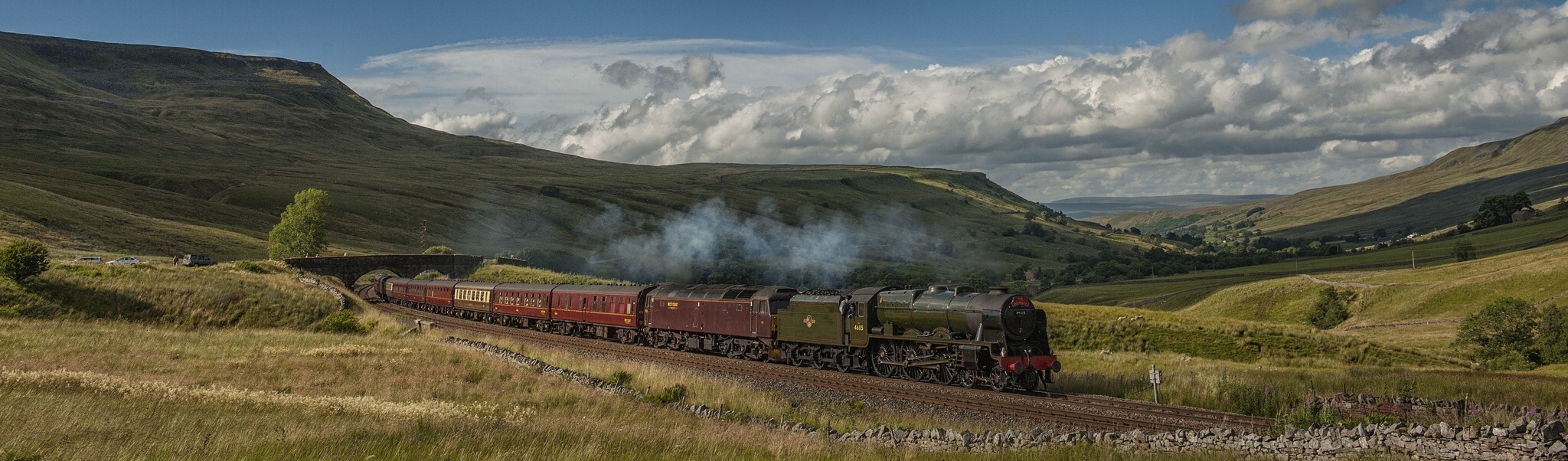
The G 10 was a class of freight tender locomotives that, with five coupled axles, was supposed to develop high tractive effort, but could still be used flexibly due to a low axle load. The successful design not only secured its a long production time, but also orders from other railways at home and abroad.
The design was based on assemblies from other locomotives that had proven themselves and thus saved development costs. The running gear was basically the same as that of the tank locomotive T 16, but the first and last axle were flexibly mounted for better running through curves. This in turn benefited the T 16, which was designated as the T 161 with the modified chassis. The boiler was taken from the P 8, it was known for its good evaporation performance.
The procurement extended from 1910 to 1925, so the last machines were put into service directly by the Reichsbahn. A total of 2,615 units were built for the Prussian State Railways and their successors. Other customers with smaller quantities were the Reichseisenbahnen Alsace-Lorraine and the Saarbahnen in the German-speaking area, as well as Turkey, Romania, Poland and Lithuania abroad. More locomotives were built in Romania until 1944 and some of the Turkish engines were built in Sweden at NoHAB.
The number of G 10s given away as reparations after the First World War, with 222 units, was relatively small compared to other locomotives, and this meant that in the years that followed they could also be distributed throughout the country outside of Prussian territory. They were classified as class 5710-35. Despite their relatively low speed of 60 km/h, they were also used in front of passenger trains on secondary lines with fewer curves. Some were given Bavarian type 3 T 20.2 tenders, like those used on the G 4/5 H. Due to their distribution over a large area, 112 of the locomotives remaining in Germany came to the Reichsbahn in the GDR, 649 to the Bundesbahn and 81 to the railways of the Saarland, which initially did not belong to Germany. The decommissioning took place at the Federal Railways until 1970 and at the Reichsbahn until 1972.