Banner
Navigation

Navigation

loco-info.com
The reference for locomotives and railcars

Baden XII

Baden III

Germany 1861 41 produced
No. 127 with a small steam dome on a works photo of MBG Karlsruhe PD

Locomotives with no coupled axles were soon no longer sufficient on the Grand Duchy of Baden State Railways either, and so class XII was developed with a 4-4-0 wheel arrangement and a remarkably short wheelbase. Certain similarities to Swiss locomotives are not surprising, since the Swiss network was also used in part.

Earlier locomotives often had a 2-2-2 wheel arrangement, but when adding a second coupled axle, a front bogie was chosen instead of two individual carrying axles. In order to be able to continue to use the existing turntables, the overall wheelbase was designed to be as short as possible. Due to the large driving wheels, this was not achieved simply by moving the bogie back; the bogie itself had to be made very short and the distance between the remaining axles kept as short as possible.

Since development was making rapid progress at the time, the engines differed depending on the year of construction. It was noticeable that the steam dome was relatively small in the first batches and significantly larger in the later ones. What they all had in common was that the external leaf springs were noticeable and the deceleration was carried out via spindle brakes on all wheels of the tender. Due to the design of the boiler and the position of the cylinders in front of the bogie, a speed of only 60 km/h was possible despite the large wheels.

Despite the inadequacy, the engines of the series designated as type III from 1868 became indispensable, so that from 1869 a reinforced version was procured as III a. From 1881, many of the 41 examples of the XII or III and the III a were converted to the III b with an even more powerful boiler and longer frame. The locomotives that had not been converted were taken out of service at the beginning of the 1890s, and the rest were able to survive for a few more years after the turn of the century.
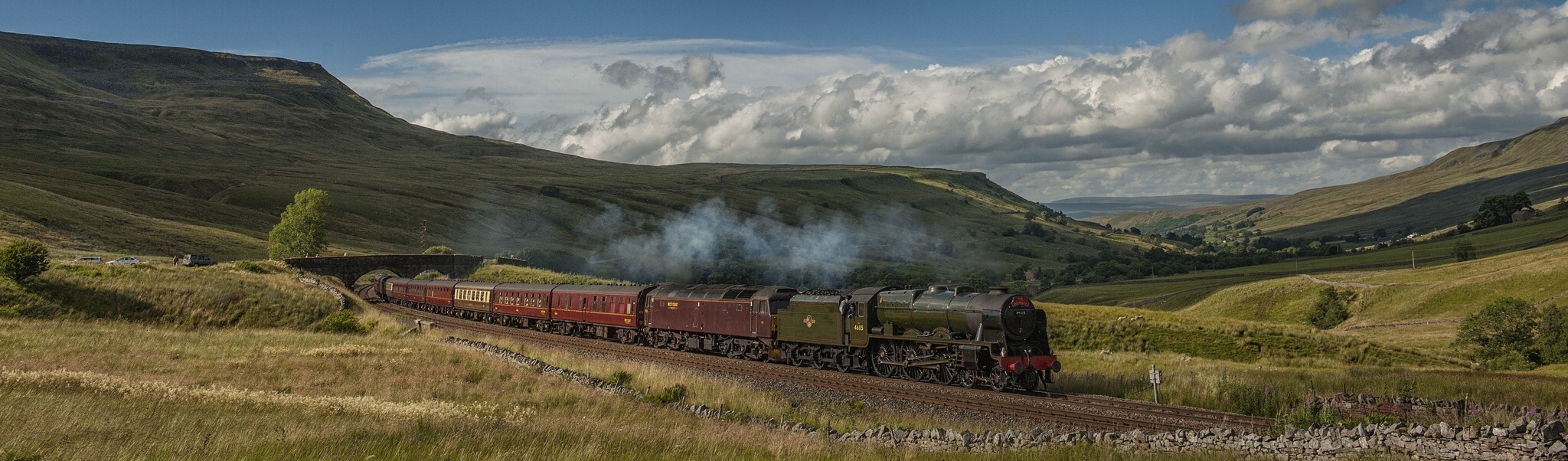
At the beginning of the 20th century, this locomotive could be found working in shunting service in Basel Locomotive Magazine, April 1903

Technical data

General

Property 1861 variant 1864 variant
Built 1861-1863 1864-1865
Manufacturers MBG Karlsruhe
Wheel arrangement 4-4-0 (American)
Gauge 1,435 mm (Standard gauge)

Dimensions and weights

Property 1861 variant 1864 variant
Length 13.45 m
Wheelbase 4.50 m
Total wheelbase 10.13 m
Empty mass 25.5 t
Service mass 28.7 t
Adhesion mass 16 t
Rigid wheelbase 1.95 m
Axle load 8 t
Water capacity 5,670 l 5,400 l

Boiler

Property 1861 variant 1864 variant
Grate area 0.97 m²
Firebox surface 5.86 m²
Tube heating surface 80.36 m² 84.01 m²
Evaporative heating surface 86.22 m² 89.87 m²
Total heating surface 86.2 m² 89.9 m²

Power plant

Property 1861 variant 1864 variant
Driver diameter 1,830 mm
Boiler pressure 7 bar 8 bar
Expansion type simple expansion
Cylinders two, 405 x 560 mm

Power

Property 1861 variant 1864 variant
Power source steam
Estimated power 130 kW (177 PS)
Top speed 60 km/h
Starting effort 29.9 kN 34.1 kN

Calculated values

Property 1861 variant 1864 variant
Factor of adhesion 1 : 5.26 1 : 4.60
Optimal speed 27 km/h 23 km/h
Power-to-weight ratio 4.5 kW/t
Heating Surface Equivalent 115.5 m² 119.2 m²
Cylinder volume/HSE 1 : 1,249.00 1 : 1,210.74
Adhesive weight/Total 1 : 1.79
Tractive force/Heating surface 1 : 7.23 1 : 7.93
Grate area/Heating surface 1 : 88.89 1 : 92.65
Firebox/Tube surface 1 : 13.71 1 : 14.34
Auf Deutsch umschalten

Settings

Your settings are retained for this browser session only.

Consent to cookies

We use cookies to save your display settings. If you decline, the settings are retained only for the current browser session.