Banner
Navigation
loco-info.com
The reference for locomotives and railcars

Great Northern (UK) class C1 (small boiler) “Klondykes”

London & North Eastern class C2

Great Britain 1898 22 produced
Locomotive Magazine, July 1898

Shortly before the turn of the century, Henry Ivatt had the task of developing a new locomotive for the increasing loads of the most important express trains. He had to measure himself against the singles from his predecessor Patrick Stirling, who were still considered excellent and very fast, but no longer powerful enough. Now this was the first use of the 4-4-2 wheel arrangement in Great Britain, which originally came from the USA and was known there as “Atlantic”. While the Atlantic was developed in the US from the 4-4-0 “American” to allow for a larger firebox and smoother running, in the UK it was a 4-2-2 “Single” with an extra coupled axle. 

The class also represented a departure from British tradition in other respects, most notably with its outside cylinders. The class was initially only named after the first one built with the number 990 and later got the designation C1. To distinguish them from the larger boiler design of 1902, the locomotives are generally known simply as “C1 (small boiler)” or “Small Atlantics”. Because of the American influence, they were also nicknamed “Klondykes” after the Klondike Gold Rush. A single example, number 271, was built in 1902 with four small simple acting cylinders.

In total, 22 were built by 1903. The locomotives easily reached 90 mph, which proved difficult in everyday use on lines such as between London and Doncaster. At some speeds, it was often found that the cylinders were too small to utilize the boiler's output. This led to unfavorable valve gear settings during operation, which led to high steam consumption.

In 1909, number 988 was the only one equipped with a Schmidt patent superheater. The boiler pressure was reduced from 175 to 160 psi and in return the cylinder diameter was increased from 19 to 20 inches. From 1914 all other class members were rebuilt with the Robinson superheater. From 1923, they came to the LNER as class C2. Their withdrawals began as early as 1935 and lasted until 1946. Today only number 990, which was built first, still exists, which bears the name “Henry Oakley” after the former managing director of the Great Northern.
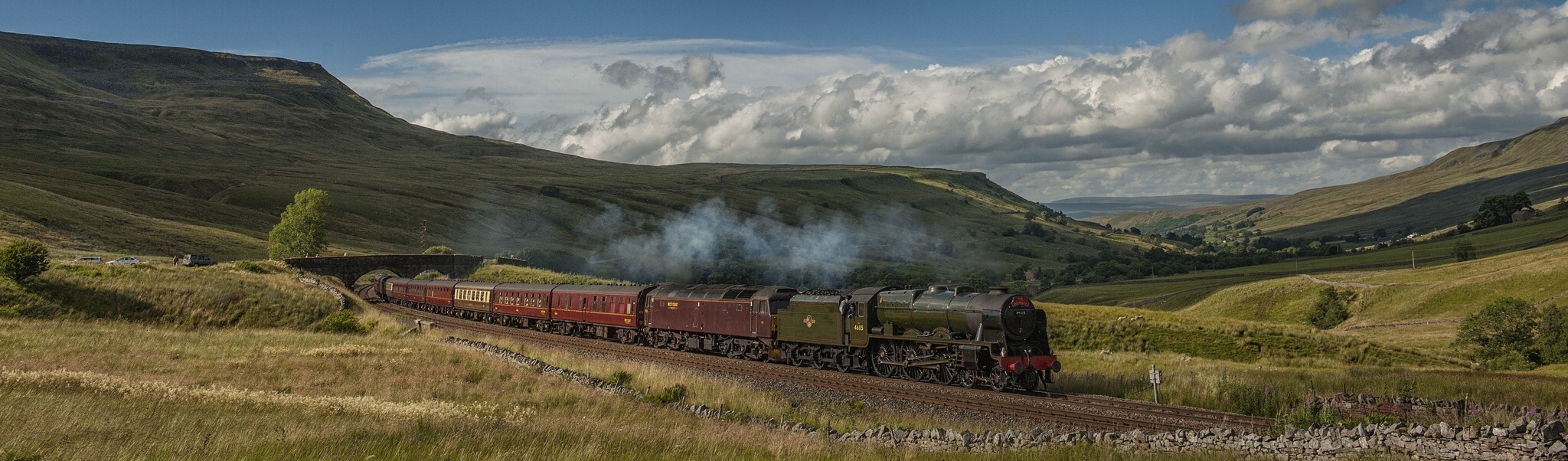
No. 990 “Henry Oakley” at the Doncaster Works Open Day, July 2003 Our Phellap / CC BY-SA 3.0
Schematic drawing Locomotive Magazine, October 1900

Technical data

General

Property production superheated No. 271
Built 1898-1903 1909, 1914-1925 1902
Manufacturers Doncaster
Wheel arrangement 4-4-2 (Atlantic)
Gauge 1,435 mm (Standard gauge)

Dimensions and weights

Property production superheated No. 271
Wheelbase 8.03 m 8.15 m
Total wheelbase 14.71 m
Service mass 58.9 t 61 t 59.7 t
Adhesion mass 31.5 t 32.7 t 33.3 t
Total mass 100.5 t 102.5 t 98.8 t
Rigid wheelbase 2.08 m 2.10 m
Axle load 16.2 t 16.9 t 17.3 t
Water capacity 16,682 l
Fuel capacity 5.1 t (coal)

Boiler

Property production superheated No. 271
Grate area 2.485 m² 2.276 m²
Firebox surface 13.006 m² 12.728 m² 13.053 m²
Tube heating surface 120.96 m² 95.412 m² 108 m²
Evaporative heating surface 133.966 m² 108.139 m² 121.053 m²
Total heating surface 134.0 m² 140.0 m² 121.1 m²
Superheater surface 31.866 m²

Power plant

Property production superheated No. 271
Driver diameter 1,981 mm
Boiler pressure 12.1 bar 11.7 bar 12.1 bar
Expansion type simple expansion
Cylinders two, 476 x 610 mm two, 508 x 610 mm four, 381 x 508 mm

Power

Property production superheated No. 271
Power source steam
Estimated power 597 kW (812 PS) 783 kW (1,065 PS) 578 kW (786 PS)
Top speed 145 km/h
Starting effort 71.6 kN 79.1 kN 76.3 kN

Calculated values

Property production superheated No. 271
Factor of adhesion 1 : 4.32 1 : 4.06 1 : 4.28
Optimal speed 51 km/h 61 km/h 47 km/h
Power-to-weight ratio 10.1 kW/t 12.8 kW/t 9.7 kW/t
Heating Surface Equivalent 199.0 m² 235.5 m² 186.3 m²
Cylinder volume/HSE 1 : 1,091.42 1 : 1,049.25 1 : 1,243.39
Adhesive weight/Total 1 : 1.87 1 : 1.86 1 : 1.79
Tractive force/Heating surface 1 : 11.16 1 : 11.80 1 : 13.17
Grate area/Heating surface 1 : 53.91 1 : 61.51 1 : 53.19
Firebox/Tube surface 1 : 9.30 1 : 7.50 1 : 8.27
Total/Superheater 1 : 3.39
Auf Deutsch umschalten

Settings

Your settings are retained for this browser session only.

Consent to cookies

We use cookies to save your display settings. If you decline, the settings are retained only for the current browser session.