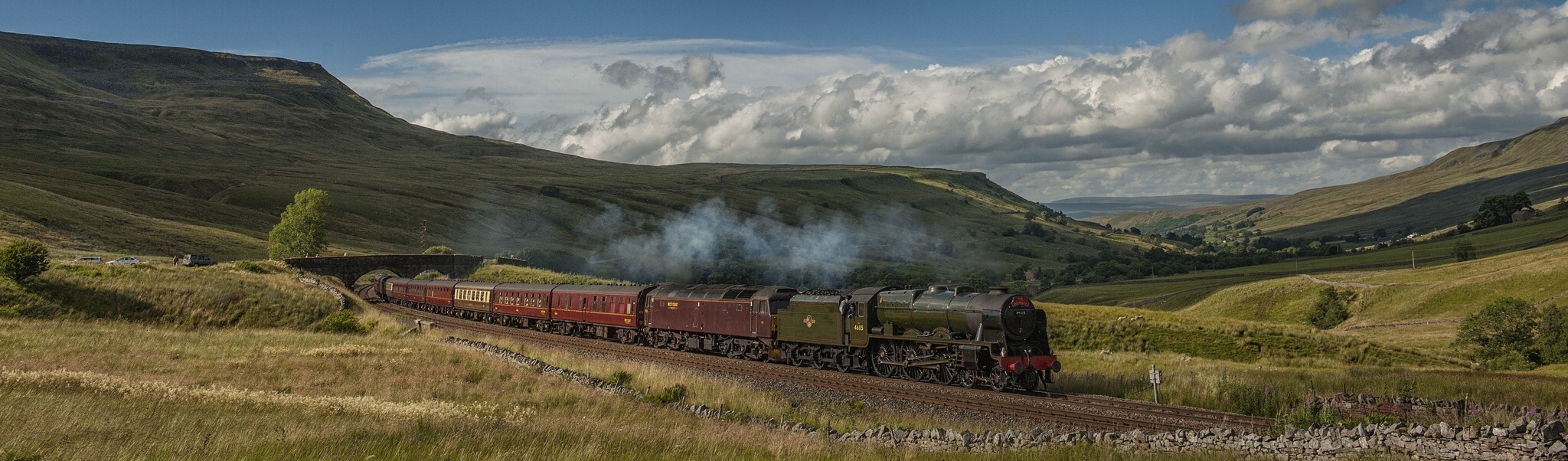
In order to meet the need for a faster and more powerful freight locomotive, a new series with a 2-6-0 wheel arrangement was developed on the basis of the six-coupled G 41. The chassis was expanded to include a moveable leading axle designed as an Adams axle. Due to the fact that the service weight had only increased by around eight tonnes, this was only loaded with nine tonnes. At the same time, the grate surface was enlarged and the boiler was placed higher in order to be able to accommodate the larger firebox above the coupled wheel sets, which were pushed back a little. Due to the speed that had now increased to 65 km/h, air brakes were installed in some of the units so that they could be used in front of express freight and passenger trains.
The two-cylinder engine was still controlled by means of an internal Allan valve gear. A step backwards in the development was made with the boiler pressure, since this had already been twelve bar on the G 41 and only ten bar was used here initially to save weight. Due to the larger boiler, however, this did not mean a loss of power. Boilers with the higher pressure were only used in later series.
In practice, it turned out that the G 51 were not significantly more powerful than the G 41, the leading axle required more maintenance, and they could only exploit their higher speed. Therefore, the G 52 with a compound engine was developed and the G 51 was only further built in smaller numbers because of its better suitability for routes with many short stops.
Up to 1901, 268 machines were manufactured, of which 71 were taken over by the Reichsbahn in 1925 and assigned the numbers 54 001 to 54 071 as class 540. Their time ended in 1930 as they had to give way to more modern and powerful machines. There was no longer a need for tender locomotives in this power class for freight trains, as these had now been taken over by tank locomotives. As a light tender locomotive for passenger trains, there was now the class 24, which was much better suited for this purpose and was also much faster.