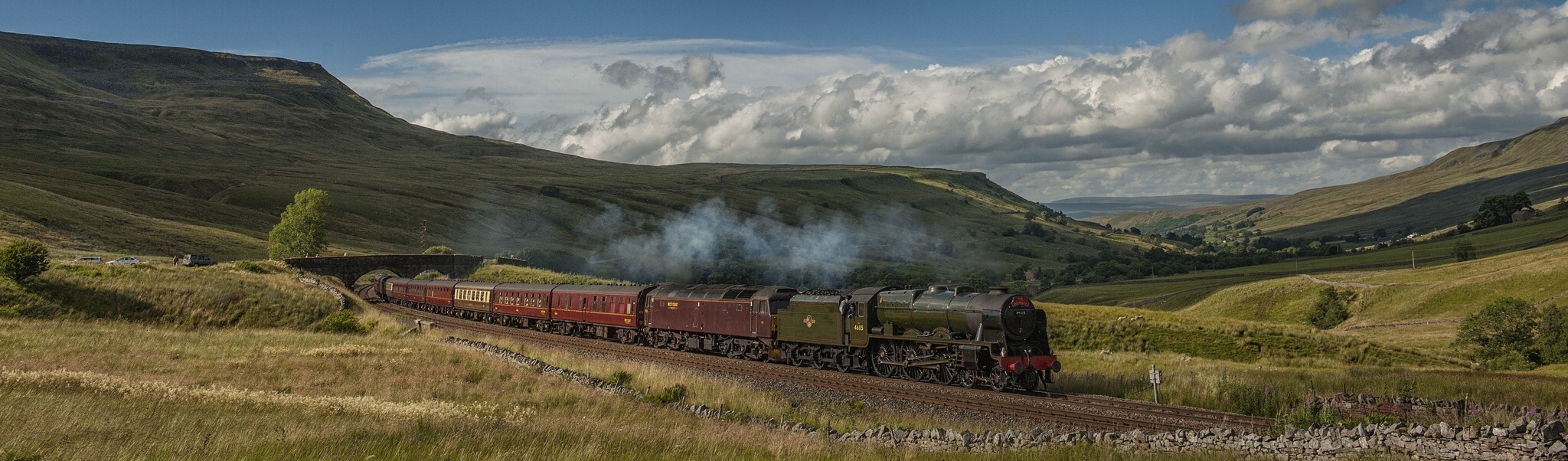




Philadelphia & Reading No. 100 (1902)
United States 1902 1 produced
One of the Philadelphia & Reading inspection engines was number 100, built by Baldwin in 1902 as their number 21341. It had a 4-4-0 wheel arrangement and a narrow boiler. The boiler was deeply embedded in the passenger compartment and there were four armchairs on each of its sides. With a heating surface smaller than that of most 1870s 4-4-0 locomotives, it was not intended to haul many additional cars. The locomotive was painted olive green with crimson stripes while the tender was Pullman brown with gold lettering and stripes. The latter had a scoop to replenish the water on the run. In 1913 a new built 4-4-2 inspection engine got the number 100 and this one was renumbered to 102. It was scrapped in 1925.
Technical data
General
- Built
- 1902
- Manufacturers
- Baldwin
- Wheel arrangement
- 4-4-0 (American)
- Gauge
- 1,435 mm (Standard gauge)
Dimensions and weights
- Length loco
- 9.79 m
- Wheelbase
- 6.20 m
- Service mass
- 44.5 t
- Adhesion mass
- 29 t
- Total mass
- 81.6 t
- Rigid wheelbase
- 2.29 m
- Axle load
- 14.5 t
- Water capacity
- 13,249 l
Boiler
- Grate area
- 2.295 m²
- Firebox surface
- 8.203 m²
- Tube heating surface
- 84.607 m²
- Evaporative heating surface
- 92.81 m²
- Total heating surface
- 92.8 m²
Power plant
- Driver diameter
- 1,524 mm
- Boiler pressure
- 13.8 bar
- Expansion type
- simple expansion
- Cylinders
- two, 432 x 508 mm
Power
- Power source
- steam
- Estimated power
- 373 kW (507 PS)
- Starting effort
- 72.8 kN
Calculated values
- Factor of adhesion
- 1 : 3.91
- Optimal speed
- 31 km/h
- Power-to-weight ratio
- 8.4 kW/t
- Heating Surface Equivalent
- 133.8 m²
- Cylinder volume/HSE
- 1 : 1,111.76
- Adhesive weight/Total
- 1 : 1.53
- Tractive force/Heating surface
- 1 : 16.39
- Grate area/Heating surface
- 1 : 40.44
- Firebox/Tube surface
- 1 : 10.31