


German Federal Railway V 10010
German Federal Railway class 211

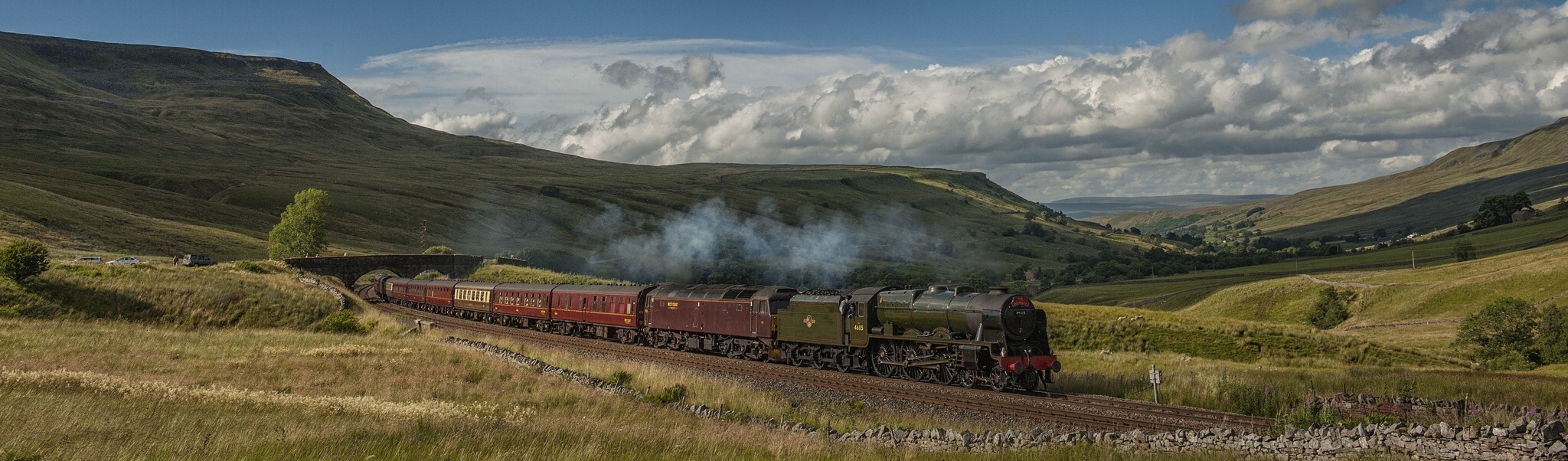
In order to be able to replace steam locomotives on branch lines, MaK developed the V 100 on behalf of the Bundsbahn. In order to save development costs, the drive train of the locomotive corresponded to half a V 200. In the basic design, the V 80 was taken as the basis, but its weaknesses were eliminated. In view of the more powerful V 10020, the locomotives were soon designated as V 10010 and became class 211 from 1968. By 1963, 381 units had been built for the Bundesbahn. Ten more MaK V 100 PA were built for private railways with a slow-running MaK marine diesel with 1,300 hp.
Most of the locomotives used the two models from Maybach and Mercedes that were also installed in the V 200 as engine. Only a few received an engine from MAN, which was later replaced. Since the cardan shafts of the outer axles on the V 80 could be bent under load due to their length, only the inner axles on the V 100 were driven by the central cardan shafts. Inside the bogies, another cardan shaft ran from the inner to the outer axle. Since the electric engine control of the previous diesel locomotives was not sensitive enough, a new, electro-pneumatic control was developed.
Since the wide hoods of the V 80 impaired visibility, they were made narrower on the V 100 and were not accessible. Maintenance was now carried out from the outside via hoods that could be opened. The option to temporarily overload the engine to 1,250 hp was installed ex works. To reduce wear and tear, this feature was later blocked. Many locomotives received multiple and push-pull train controls, which were compatible with all subsequent diesel locomotives up to the class 218.
The top speed of initially 90 km/h was increased to 100 km/h in 1965 after the installation of an Indusi. In the seventies, some of the engines without piston cooling had to be replaced. The 1,350 hp engine of the V 10020 was sometimes used here, but it had to be de-rated to 1,100 hp when using the original transmission. By 2001, all locomotives were retired from Deutsche Bahn.
In the early 1990s, 36 units had already been sold to ÖBB, where they received a new Caterpillar 3512 engine. They were used until 2003 as class 2048. Other locomotives were sold to private companies, mainly track construction companies. Some of these had been refurbished by Alstom. The new operators came from several European countries, from Asia and Africa. Some of the locomotives that remained in Germany were preserved in museums.
Technical data
General
- Built
- 1958-1963
- Manufacturers
- MaK, Deutz, Esslingen, Henschel, Jung, Krauss-Maffei, Krupp
- Wheel arrangement
- B-B
- Gauge
- 1,435 mm (Standard gauge)
Dimensions and weights
- Length
- 12.10 m
- Wheelbase
- 8.20 m
- Service mass
- 62 t
- Adhesion mass
- 62 t
- Rigid wheelbase
- 2.20 m
- Axle load
- 15.5 t
Power plant
- Engine
- Maybach MD 650, Mercedes-Benz MB 820 Bb oder MAN L 12 V 18/21
- Engine type
- V12 diesel
Power
- Power source
- diesel-hydraulic
- Indicated power
- 809 kW (1,100 PS)
- Top speed
- 100 km/h
- Starting effort
- 177.0 kN
Calculated values
- Factor of adhesion
- 1 : 3.44
- Power-to-weight ratio
- 13.0 kW/t
- Adhesive weight/Total
- 1 : 1.00