


Tender locomotives 2-2-2 “Single”
UIC Classification 1A1

The wheel arrangement 2-2-2 designates a steam locomotive with a centrally arranged driving axle, one leading and one trailing axle. In different countries, this wheel arrangement is referred to as follows:
Single
UIC: 1A1
Whyte: 2-2-2
Switzerland: 1/3
France: 111
Turkey: 13
Locomotives with this wheel arrangement were mainly used for express and passenger trains, so the diameter of the drivers was usually significantly larger than that of the carrying wheels. With the exception of a few late tank locomotives, all axles were always mounted fixed in the frame. In order to be able to negotiate curves, the driving wheels were usually designed without flanges or at least provided with significantly thinner flanges.
The design was introduced by Stephenson in 1833. It was created by adding a trailing axle to the 2-2-0 “Planet”. This had become necessary when it was found that the load on the driven axle of the “Planet” was higher than the rails could withstand. Additionally, this increased stability at higher speeds and, thanks to the extra weight, allowed for a larger boiler with a more generous firebox. One of the early locomotives of this design known as the “Patentee” was the “Adler” (Eagle), with which the first German railway ran between Nuremberg and Fürth.
After many of Stephenson's Patentees were delivered to inland customers and abroad, some were also built under license and similar ones were created with the same wheel arrangement. The “Jenny Lind”, built in 1847 by E.B. Wilson & Co. for the LB&SCR formed the basis for hundreds of similar locomotives. It is often also called “Single”, but this can lead to confusion with the 4-2-2. During the 1840s and for most of the 1850s, the 2-2-2 was the standard model for express trains. When it came to procuring express trains for the Great Western, Brunel also relied primarily on locomotives of this type, which had driving wheels with a diameter of up to eight feet.
Only with the advent of express locomotives with 2-4-0 wheel arrangement with large driving wheels was the 2-2-2 superseded, since the increased train loads and the required acceleration could no longer be managed with one driving axle. The 2-2-2 experienced a renaissance in Britain from the mid-1870s, when the introduction of steam sanding gear improved the starting tractive effort. In addition to the singles with a 4-2-2 wheel arrangement, express locomotives with a 2-2-2 wheel arrangement with driving wheels significantly larger than six and a half feet were now being built until the 1890s.

Locomotives
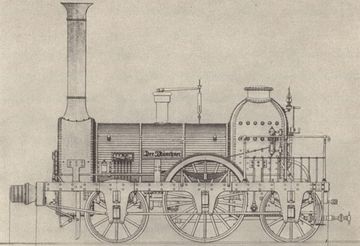
Bavarian “Der Münchner” and A I
Germany
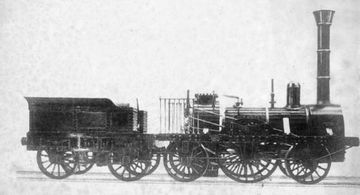
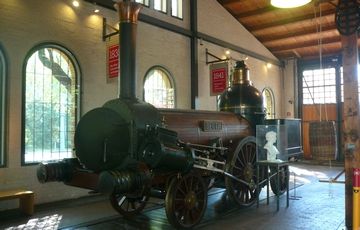
Berlin-Anhalt Railway “Beuth”
Germany

Eastern Counties No. 51 to 67
Great Britain
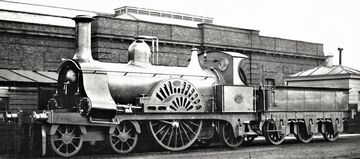
Great Eastern class W
Great Britain
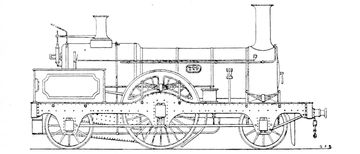
Great Northern (UK) Sturrock 7 ft Singles
Great Britain
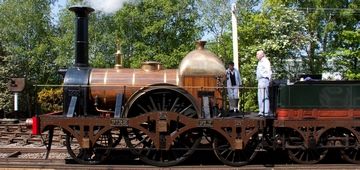
Great Western Railway Fire Fly class
Great Britain
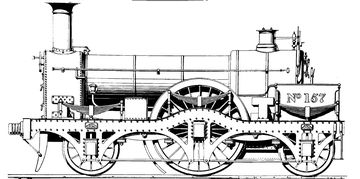
Great Western Railway class 157
Great Britain
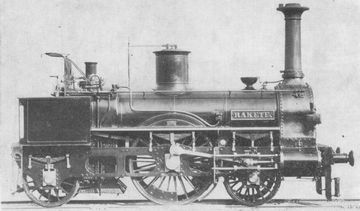
Emperor Ferdinand Northern Railway IVa, later Ia
Austria-Hungary
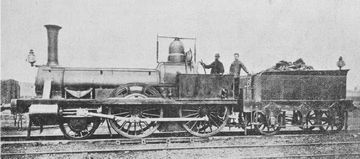
Lancashire & Yorkshire class 53
Great Britain
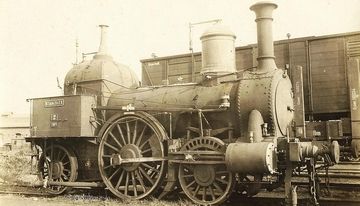
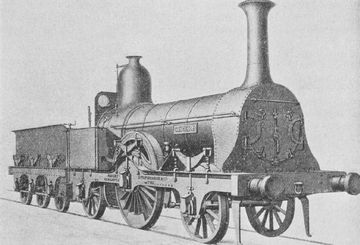
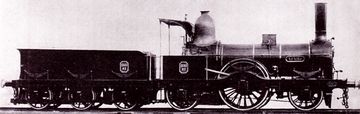
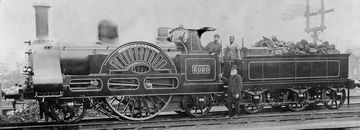
London & North Western No. 3020 “Cornwall”
Great Britain
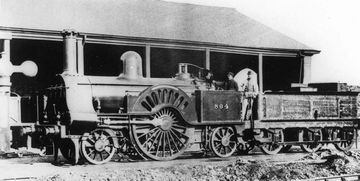
London & North Western Problem or Lady of the Lake class
Great Britain
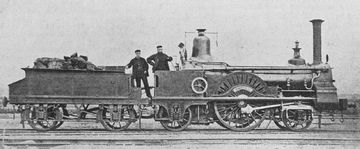
London & South Western Canute class
Great Britain
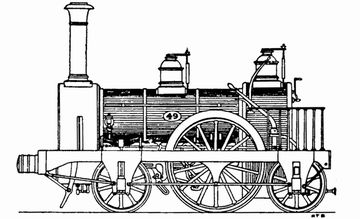
London, Brighton & South Coast Hackworth Singles
Great Britain
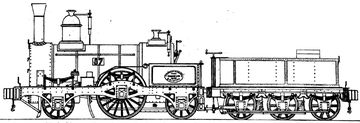
London, Brighton & South Coast Stothert-Slaughter 2-2-2
Great Britain
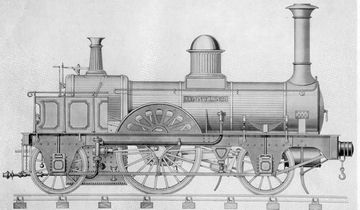
London, Brighton & South Coast Jenny Lind Singles
Great Britain
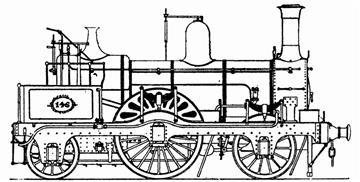
London, Brighton & South Coast “Lancing” Singles
Great Britain

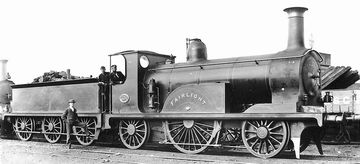
London, Brighton & South Coast class G
Great Britain
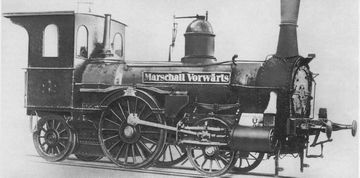
Mecklenburg I
Germany
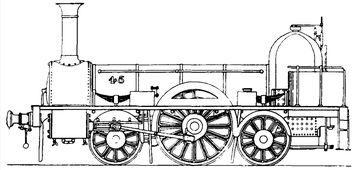
Norfolk Railway No. 3 to 5
Great Britain