


Compare locomotives
Add a locomotive
Lancashire & Yorkshire class 7 “High-Flyers”
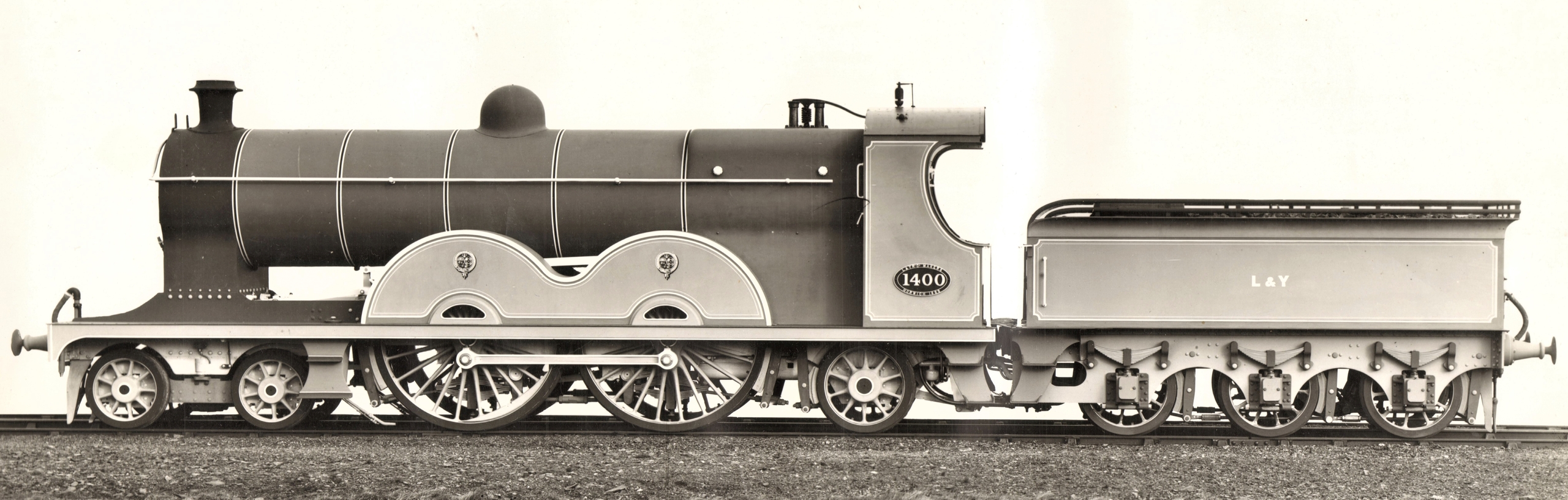
Also known as “High-Flyers”, the Lancashire & Yorkshire class 7 locomotives were among the first Atlantics in Britain. Their nickname came from the high-pitched boiler that lay above the 7 ft 3 in high driving wheels ...
General
| Property | Lancashire & Yorkshire class 7 “High-Flyers”Remove |
|---|---|
| Built | 1899-1902 |
| Manufacturers | Horwich |
| Wheel arrangement | 4-4-2 (Atlantic) |
| Gauge | 1,435 mm (Standard gauge) |
Dimensions and weights
| Property | Lancashire & Yorkshire class 7 “High-Flyers”Remove |
|---|---|
| Wheelbase | 8.46 m |
| Rigid wheelbase | 2.22 m |
| Service weight | 59.7 t |
| Adhesive weight | 35.6 t |
| Axle load | 17.8 t |
| Total weight | 90.8 t |
| Water capacity | 12,503 l |
| Fuel capacity | 5.3 t (coal) |
Boiler
| Property | Lancashire & Yorkshire class 7 “High-Flyers”Remove |
|---|---|
| Grate area | 2.42 m² |
| Firebox surface | 16.332 m² |
| Tube heating surface | 174.398 m² |
| Evaporative heating surface | 190.73 m² |
| Total heating surface | 190.7 m² |
Power plant
| Property | Lancashire & Yorkshire class 7 “High-Flyers”Remove |
|---|---|
| Driver diameter | 2,210 mm |
| Boiler pressure | 12.4 bar |
| Expansion type | simple expansion |
| Cylinders | two, 483 x 660 mm |
Power
| Property | Lancashire & Yorkshire class 7 “High-Flyers”Remove |
|---|---|
| Power source | steam |
| Estimated power | 708 kW (963 PS) |
| Starting effort | 73.4 kN |
Calculated values
| Property | Lancashire & Yorkshire class 7 “High-Flyers”Remove |
|---|---|
| Factor of adhesion | 1 : 4.75 |
| Optimal speed | 60 km/h |
| Power-to-weight ratio | 11.9 kW/t |
| Heating Surface Equivalent | 272.4 m² |
| Cylinder volume/HSE | 1 : 886.97 |
| Adhesive weight/Total | 1 : 1.68 |
| Tractive force/Heating surface | 1 : 8.04 |
| Grate area/Heating surface | 1 : 78.81 |
| Firebox/Tube surface | 1 : 10.68 |