



Compare locomotives
Add a locomotive
New South Wales classes C30 and C30T and originally class S636
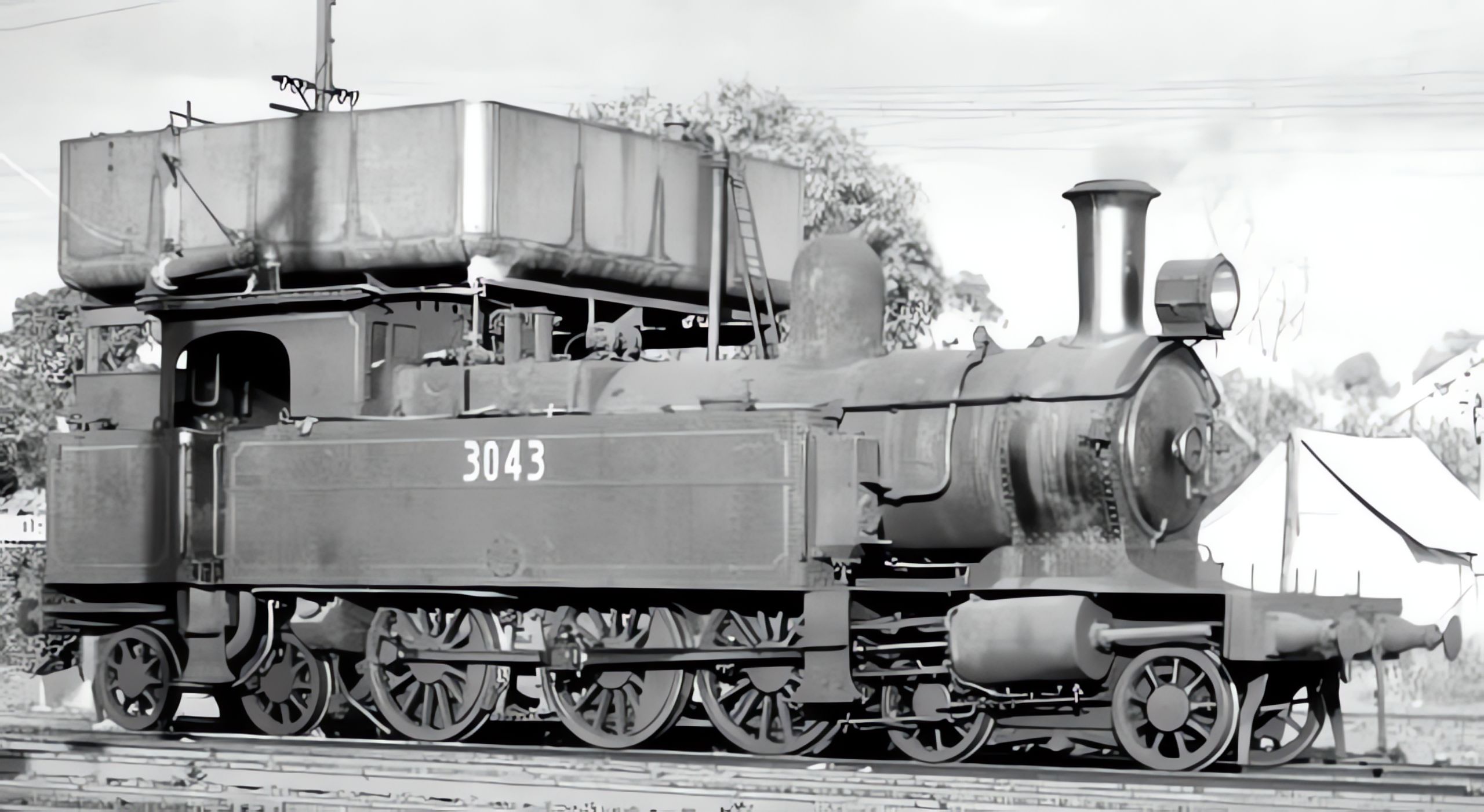
Due to increasing traffic in Sydney's suburban network at the beginning of the century, the NSWGR introduced the C30 as a class of 4-6-4T tank locomotives with a high adhesive weight and relatively small drivers for r...
General
| Property | New South Wales classes C30 and C30T and originally class S636 C30 |
|---|---|
| Built | 1903-1917 |
| Manufacturers | Beyer, Peacock & Co., Eveleigh |
| Wheel arrangement | 4-6-4T (Hudson) |
| Gauge | 1,435 mm (Standard gauge) |
Dimensions and weights
| Property | New South Wales classes C30 and C30T and originally class S636 C30 |
|---|---|
| Wheelbase | 9.83 m |
| Rigid wheelbase | 3.28 m |
| Service weight | 73.3 t |
| Adhesive weight | 43.5 t |
| Axle load | 15.1 t |
| Water capacity | 7,185 l |
| Fuel capacity | 3 t (coal) |
Boiler
| Property | New South Wales classes C30 and C30T and originally class S636 C30 |
|---|---|
| Grate area | 2.23 m² |
| Firebox surface | 11.018 m² |
| Tube heating surface | 123.97 m² |
| Evaporative heating surface | 134.988 m² |
| Total heating surface | 135.0 m² |
Power plant
| Property | New South Wales classes C30 and C30T and originally class S636 C30 |
|---|---|
| Driver diameter | 1,397 mm |
| Boiler pressure | 11 bar |
| Expansion type | simple expansion |
| Cylinders | two, 470 x 610 mm |
Power
| Property | New South Wales classes C30 and C30T and originally class S636 C30 |
|---|---|
| Power source | steam |
| Estimated power | 522 kW (710 PS) |
| Starting effort | 90.3 kN |
Calculated values
| Property | New South Wales classes C30 and C30T and originally class S636 C30 |
|---|---|
| Factor of adhesion | 1 : 4.72 |
| Optimal speed | 35 km/h |
| Power-to-weight ratio | 7.1 kW/t |
| Heating Surface Equivalent | 190.1 m² |
| Cylinder volume/HSE | 1 : 1,112.36 |
| Adhesive weight/Total | 1 : 1.69 |
| Tractive force/Heating surface | 1 : 13.98 |
| Grate area/Heating surface | 1 : 60.53 |
| Firebox/Tube surface | 1 : 11.25 |