


Victorian Railways class S

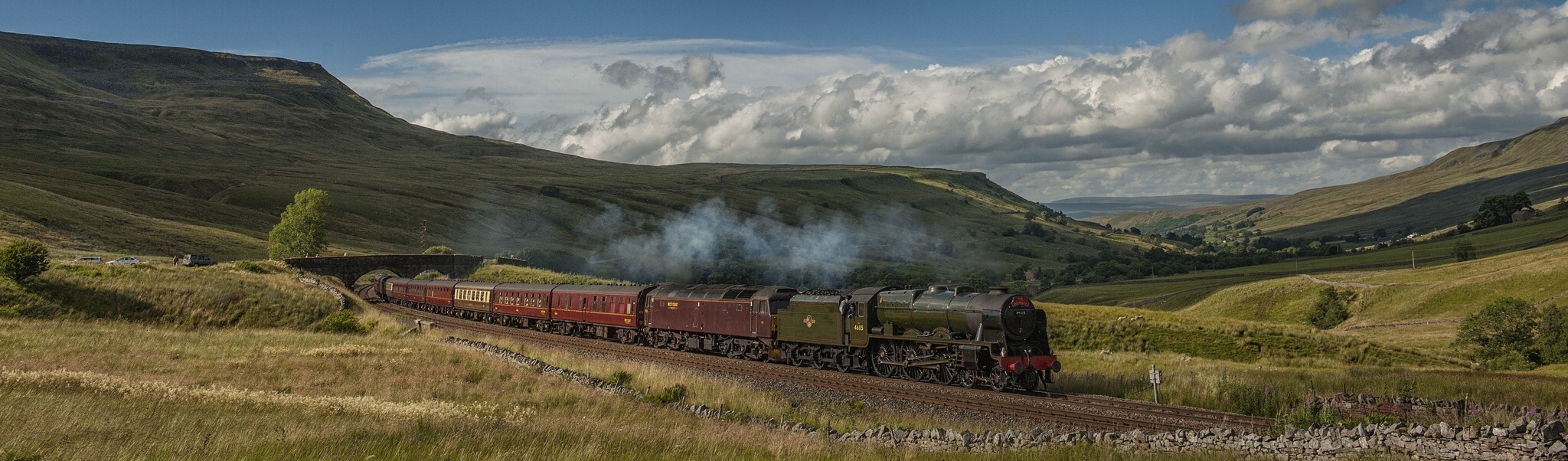
The four Pacifics of the class S were built by the Victorian Railways in their Newport Workshops for service on Melbourne-Sydney express trains on the portion up to the border to New South Wales. A major requirement was that they could eliminate the double-headings which had been necessary with the class A2 4-6-0. They were designed by Alfred E. Smith and were the heaviest locomotives built in Australia up to that point.
Their axle load was very high with with 23 and a half tons. They had bar frames and all three cylinders had been cast in a single piece. The inside cylinder was powered from the outside ones via Holcroft-Gresley conjugating gear. The design speed for regular service was 70 mph or 113 km/h.
In 1935 and 1936, all four received the new front end that had also been integrated into the A2. Smoke deflectors were added to improve the view of the crews. At the same time, the rear end of the boilers were upgraded with a combustion chamber, arch tubes and thermic syphons. Now, tests with dynamometer cars showed up to 2,300 drawbar horsepower.
In 1937, the class was streamlined for service with the air-conditioned "Spirit of Progress" train sets. These now had to haul eleven-car trains of 544 tons over inclines of two percent. To run the 190.5 miles (306.5 km) nonstop at an average of 50 mph (80 km/h), they got new six-axle tenders with 13,000 imperial gallons of water. One set an official Australian speed record with 79.5 mph or 128 km/h.
Now all four locomotives were named after prominent persons in the history of the state of Victoria. As late as 1951 and 1952, when the transformation to diesel was already gaining momentum, they were rebuilt to oil firing. Their tenders now held 2,000 imperial gallons of oil and weighed 109 tons 7 cwt. It took only until 1953 for the first one to be withdrawn and in the next year, the other three followed. All had run at least 1.1 million miles and S302 had already covered 1,446,408 miles.
Technical data
General
- Built
- 1928
- Manufacturers
- Newport
- Wheel arrangement
- 4-6-2 (Pacific)
- Gauge
- 1,600 mm (Irish broad gauge)
Dimensions and weights
- Length
- 23.95 m
- Wheelbase
- 10.67 m
- Total wheelbase
- 26.06 m
- Service mass
- 114.1 t
- Adhesion mass
- 71.6 t
- Total mass
- 195.7 t
- Rigid wheelbase
- 4.06 m
- Axle load
- 23.9 t
- Water capacity
- 39,096 l
- Fuel capacity
- 9.1 t (coal)
Boiler
- Grate area
- 4.645 m²
- Firebox surface
- 27.128 m²
- Tube heating surface
- 262.823 m²
- Evaporative heating surface
- 289.951 m²
- Superheater surface
- 58.622 m²
- Total heating surface
- 348.6 m²
Power plant
- Driver diameter
- 1,853 mm
- Boiler pressure
- 14.1 bar
- Expansion type
- simple expansion
- Cylinders
- three, 521 x 711 mm
Power
- Power source
- steam
- Estimated power
- 1,641 kW (2,231 PS)
- Starting effort
- 187.6 kN
Calculated values
- Factor of adhesion
- 1 : 3.75
- Optimal speed
- 53 km/h
- Power-to-weight ratio
- 14.4 kW/t
- Heating Surface Equivalent
- 542.8 m²
- Cylinder volume/HSE
- 1 : 836.97
- Adhesive weight/Total
- 1 : 1.59
- Tractive force/Heating surface
- 1 : 11.24
- Grate area/Heating surface
- 1 : 75.04
- Firebox/Tube surface
- 1 : 9.69
- Total/Superheater
- 1 : 4.95