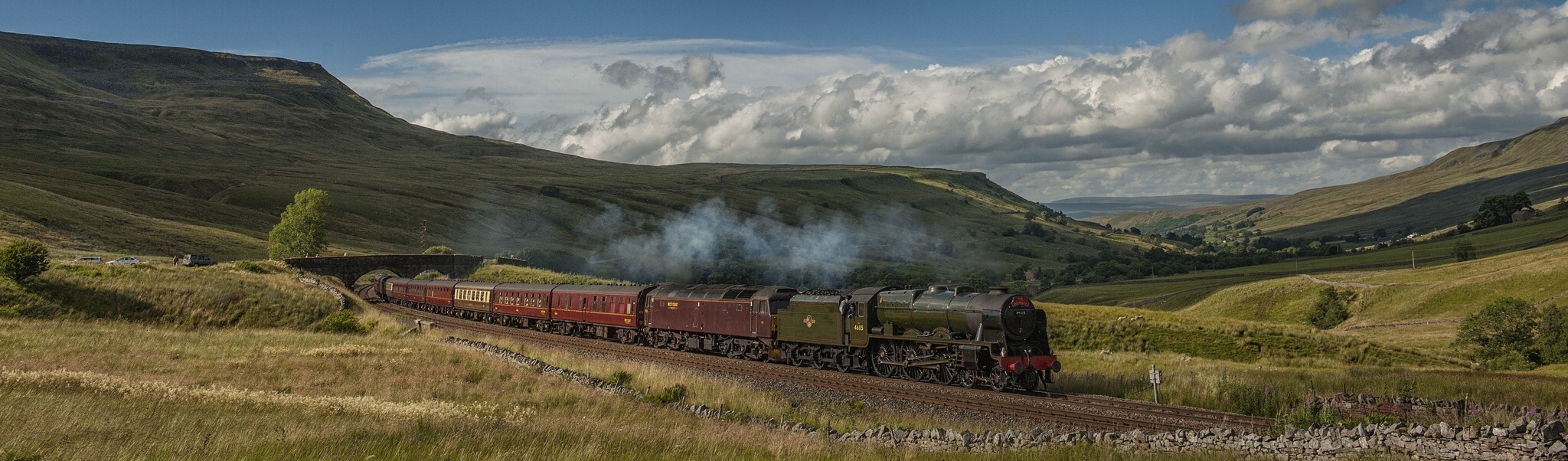



Great Western Railway class 2800

In 1903, Churchward built the first 2-8-0 locomotive in Britain. Designed for heavy freight service, it was numbered 97 and still had a saturated boiler. In 1906, it set a British record for the heaviest train with 2,012 tons and 107 cars. Series production had started at Swindon in 1905. While the boiler of the prototype was only tapered in front of the firebox, the boiler barrel of the production variant was tapered over the full length. This boiler was virtually identical with that of the Saint class. From 1909, all new locomotives had a superheater and also the existing ones were retrofitted. They used one of two variants of superheaters with either four or six elements, with a surface of 191.8 or 253.38 square feet.
By 1919, 84 had been built. Although they were built for general freight service, they were mainly used for coal trains from South Wales to the big cities in the GWR area. From 1938, Collett built the class 2884 that was largely identical to the 2800. Between 1945 and 1947, twelve were converted to burn oil for testing. The new numbers were in the 4800 range, so the previous class 4800 of 0-4-2T tank locomotives had to be renumbered to 1400. They were converted back to coal in 1948 since oil turned out to be too expensive as a fuel for locomotives. The class was withdrawn between 1958 and 1965 and six were preserved. Today, only 2807 is in running condition.
Technical data
General
| Property | prototype | production |
|---|---|---|
| Built | 1903 | 1905-1919 |
| Manufacturers | Swindon | |
| Wheel arrangement | 2-8-0 (Consolidation) | |
| Gauge | 1,435 mm (Standard gauge) | |
Dimensions and weights
| Property | prototype | production |
|---|---|---|
| Wheelbase | 8.31 m | |
| Service mass | 69.4 t | 76.7 t |
| Adhesion mass | 62.5 t | 68.6 t |
| Total mass | 113.2 t | 117.4 t |
| Rigid wheelbase | 5.13 m | 4.50 m |
| Axle load | 18.3 t | 17.5 t |
| Water capacity | 18,185 l | 15,910 l |
| Length | 19.26 m | |
| Total wheelbase | 17.93 m | |
Boiler
| Property | prototype | production |
|---|---|---|
| Grate area | 2.529 m² | 2.515 m² |
| Firebox surface | 14.343 m² | 14.38 m² |
| Tube heating surface | 184.748 m² | 156.69 m² |
| Evaporative heating surface | 199.091 m² | 171.07 m² |
| Total heating surface | 199.1 m² | 194.6 m² |
| Superheater surface | 23.54 m² |
Power plant
| Property | prototype | production |
|---|---|---|
| Driver diameter | 1,410 mm | |
| Boiler pressure | 13.8 bar | 15.5 bar |
| Expansion type | simple expansion | |
| Cylinders | two, 457 x 762 mm | two, 470 x 762 mm |
Power
| Property | prototype | production |
|---|---|---|
| Power source | steam | |
| Estimated power | 783 kW (1,065 PS) | 1,044 kW (1,419 PS) |
| Starting effort | 132.4 kN | 157.4 kN |
Calculated values
| Property | prototype | production |
|---|---|---|
| Factor of adhesion | 1 : 4.63 | 1 : 4.27 |
| Optimal speed | 35 km/h | 40 km/h |
| Power-to-weight ratio | 11.3 kW/t | 13.6 kW/t |
| Heating Surface Equivalent | 270.8 m² | 290.1 m² |
| Cylinder volume/HSE | 1 : 923.91 | 1 : 911.20 |
| Adhesive weight/Total | 1 : 1.11 | 1 : 1.12 |
| Tractive force/Heating surface | 1 : 13.89 | 1 : 16.89 |
| Grate area/Heating surface | 1 : 78.72 | 1 : 77.38 |
| Firebox/Tube surface | 1 : 12.88 | 1 : 10.90 |
| Total/Superheater | 1 : 7.27 |